Software-Unreal 虚幻 C++ 零基础入门

学习自 siki 学院。我要写代码!

资源

环境配置

还是把版本换成 UE4.27 吧,让它支持 VS2022。

课程

202-Unreal 项目文件结构解读

一些子目录是在引擎和游戏项目目录之间通用的:

  • Binaries - 包含可执行文件或编译期间创建的其他文件。

  • Build - 包含构建引擎或游戏所需的文件,包括创建特定于平台的构建版所需的文件。

  • Config - 配置文件,用于设置用来控制引擎行为的值。项目 Config 文件中设置的值会覆盖 Engine\Config 目录中设置的值。

  • Content - 保存引擎或游戏的内容,包括资源包和贴图。

  • DerivedDataCache - 包含加载时针对引用内容生成的派生数据文件。引用内容没有相应的缓存文件会导致加载时间显著延长。

  • Intermediate - 包含构建引擎或游戏时生成的临时文件。在游戏目录中,着色器存储在 Intermediate 目录中。

  • Saved - 包含自动保存、配置(.ini)文件和日志文件。此外,Engine\Saved 目录还包含崩溃日志、硬件信息和 Swarm 选项与数据。

  • Source - 包含引擎或游戏的所有源文件,包括引擎源代码、工具和游戏类等。

    • Engine - Engine 目录中的源文件组织结构如下:

      • Developer - 编辑器和引擎共同使用的文件。
      • Editor - 仅供编辑器使用的文件。
      • Programs - 引擎或编辑器使用的外部工具。
      • Runtime - 仅供引擎使用的文件。
    • Game - 游戏项目源码,建议按模块的方式进行组织。

迁移项目最小的单元是 ConfigContentXXX.uproject

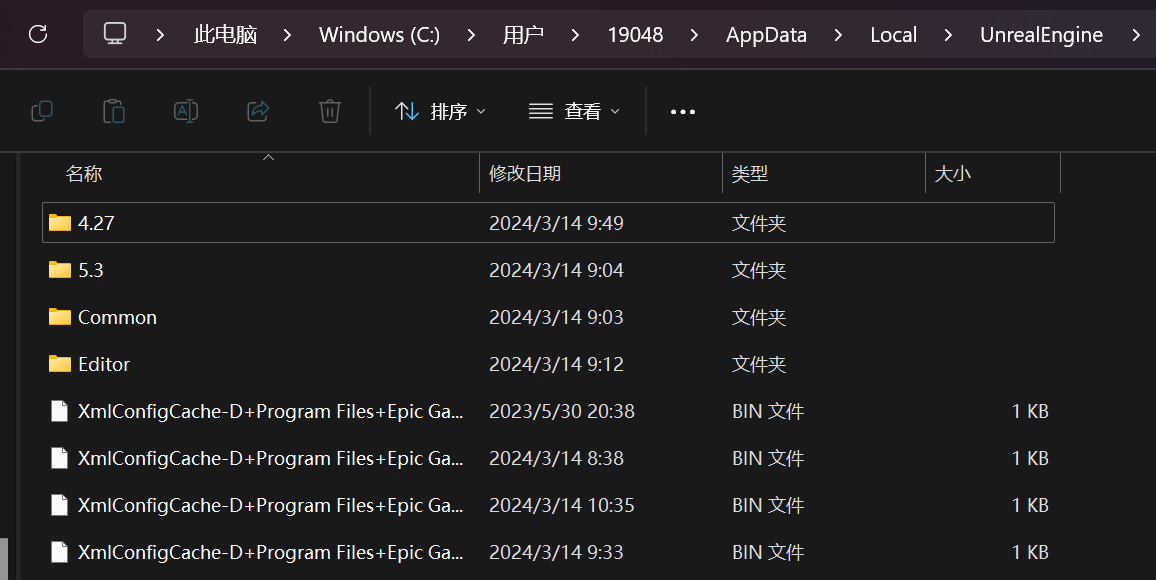
203-Unreal 缓存数据解读

png

Epic 中修改保管库的缓存位置。

png

这个路径存放着着色器的缓存。

209-C++ 与蓝图的关系与选择

C++ 与蓝图

  • 两者关系
    • 蓝图建立在 C++ 代码之上
    • 蓝图与 C++ 可以很好地协作
  • 理论平衡
    • C++ 由游戏逻辑程序员使用
      • 完成虚幻尚未封装的功能
      • 完成根据项目需求需要自定义的功能
    • 蓝图由游戏设计人员使用
      • 设计其他游戏资源
      • 功能测试时使用
      • 项目快速迭代时使用
      • 调用编写好的 C++ 代码

什么是蓝图可视化脚本

  • 蓝图可视化脚本简称“蓝图”、“蓝图脚本”
  • 蓝图是一种可视化编程
    • 实际上,你使用蓝图的时候就是在编程
    • 蓝图是一种需要编译的面向对象的可视化编程语言
  • 蓝图完全集成在虚幻 4 中
  • 通过节点与连线工作

什么是蓝图系统

  • 蓝图系统俗称“蓝图”、“蓝图类”
  • 将蓝图类想象成游戏内容的容器
    • 其可以包含组件
    • 其可以包含脚本
    • 其可以仅仅包含数据

301-C++ 基础回顾与虚幻 C++ 类的继承结构

虚幻引擎 C++ 类层级结构 (Hierarchy)

  • Object

    • 存放数据

    • 不能被放置到场景 (Level) 中

  • Actor

    • 能放置在场景 (Level) 中
    • 可以有视觉表现/可以被看到
  • Pawn

    • 可以被控制器 (Controller) 持有 (Possess)
  • Character

    • 有角色移动组件 (CharacterMovementComponent)
    • 具有适合角色的封装好的一系列功能

一个 Object 不是 (Is NOT a) Actor

一个 Object 不是一个 (Is NOT a) Pawn

一个 Actor 是一个 (ls a) Object

一个 Actor 不是一个 (Is NOT a) Pawn

一个 Pawn 是 (ls a) Actor

一个 Pawn 是 (ls a) Object

png

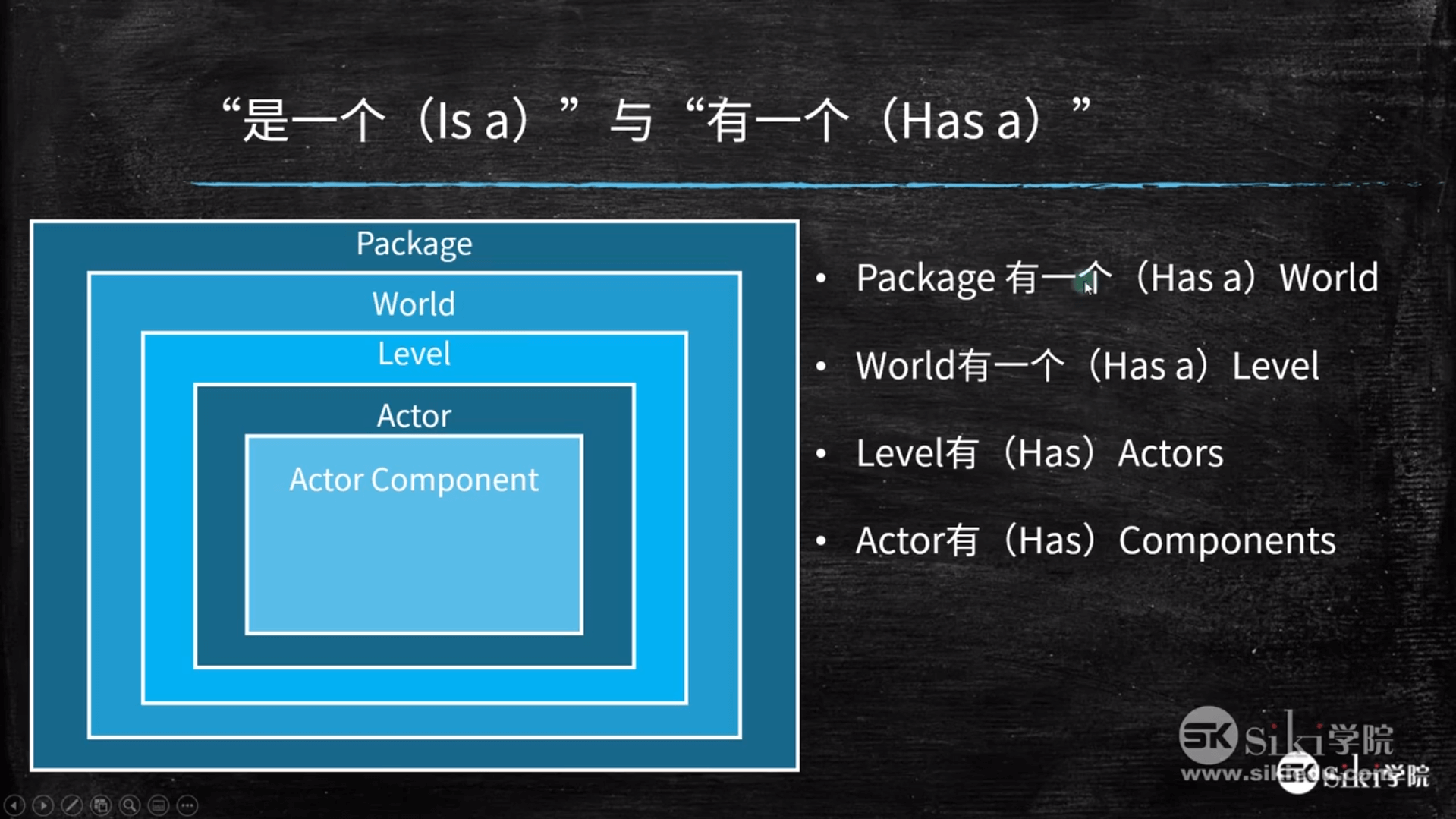
PackageWorldLevelActor 之间的关系。

302-使用宏参与虚幻的反射与垃圾回收系统

UE4 的反射系统允许在运行时获取类的信息、动态创建对象、调用函数等操作,而无需提前知道类的具体类型。通过反射系统,可以实现诸如蓝图编辑、插件系统、序列化和反序列化等功能。在 UE4 中,反射系统主要基于宏(macros)和元数据(metadata)来实现,开发者可以利用它来实现更灵活的代码设计和功能扩展。(在蓝图脚本中调用 C++ 的内容)

UE4 的垃圾回收系统负责管理动态分配的内存,在运行时自动释放不再需要的内存空间,防止内存泄漏和提高性能。UE4 使用基于引用计数(reference counting)和标记-清除(mark and sweep)算法的混合方式来进行垃圾回收,确保及时释放不再使用的对象,并最大程度地减少性能损耗。

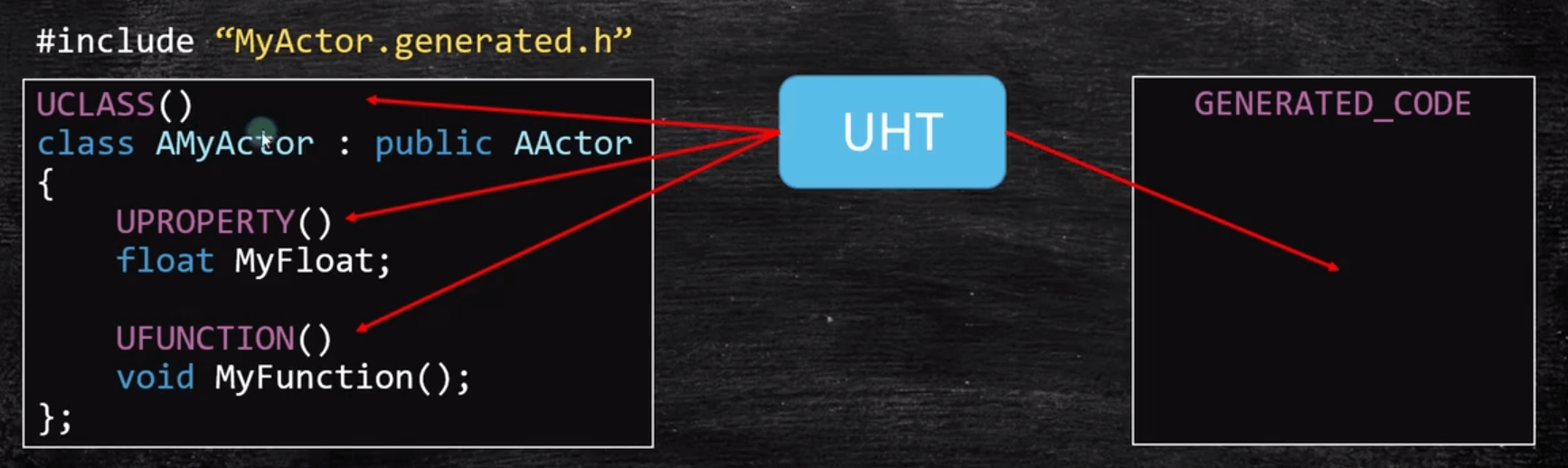
png

在定义类、变量、函数前分别加上 UCLASS()UPROPERTY()UFUNCTION() 这样的宏,就可以参与反射与垃圾回收系统,

引用头文件时,#include "MyActor.generated.h" 务必放在所有引用的头文件的下方。

303-创建自己的第一个 UObject 子类

新建一个 C++ 项目。

png

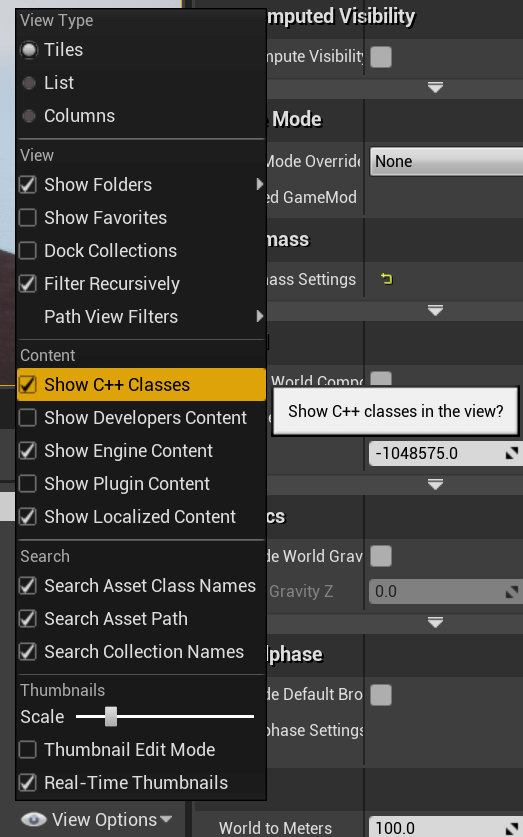
项目中确保打开了 Show C++ Classes

png

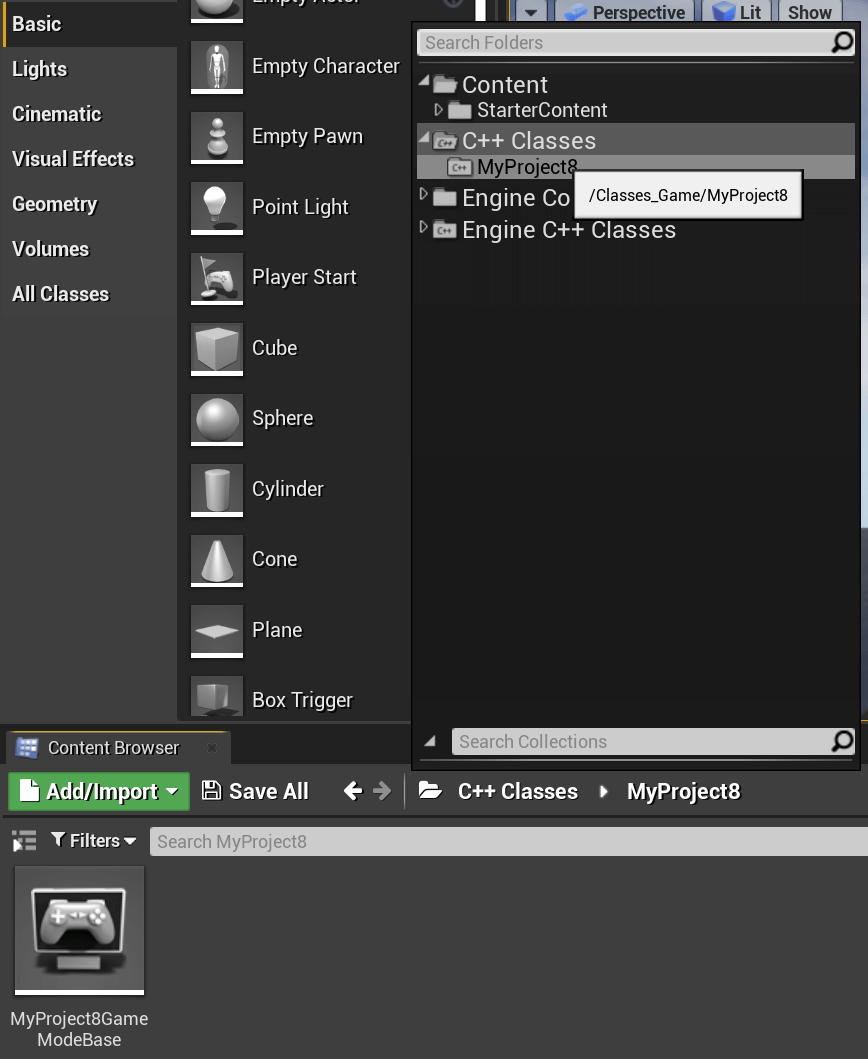
所有 C++ 类都会被存放到 C++ Classes/项目名称 中。

png

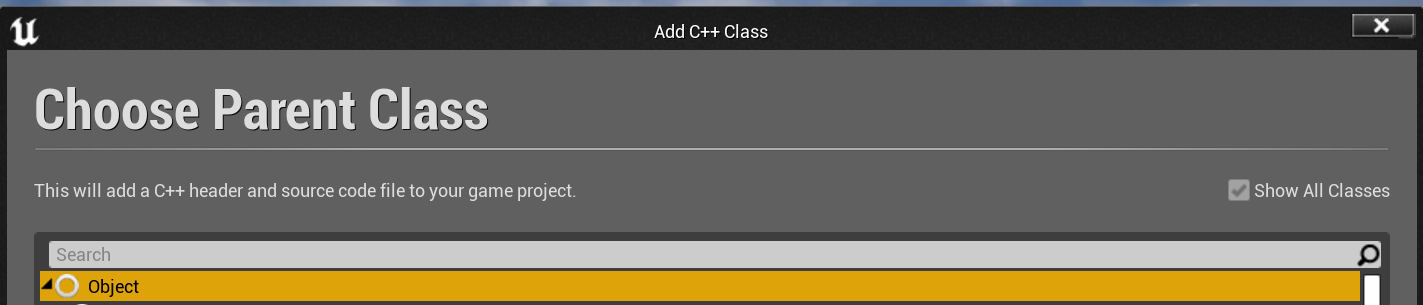
在这个目录下创建一个 C++ class,打开 Show All Classes,创建一个 Object 类。

png

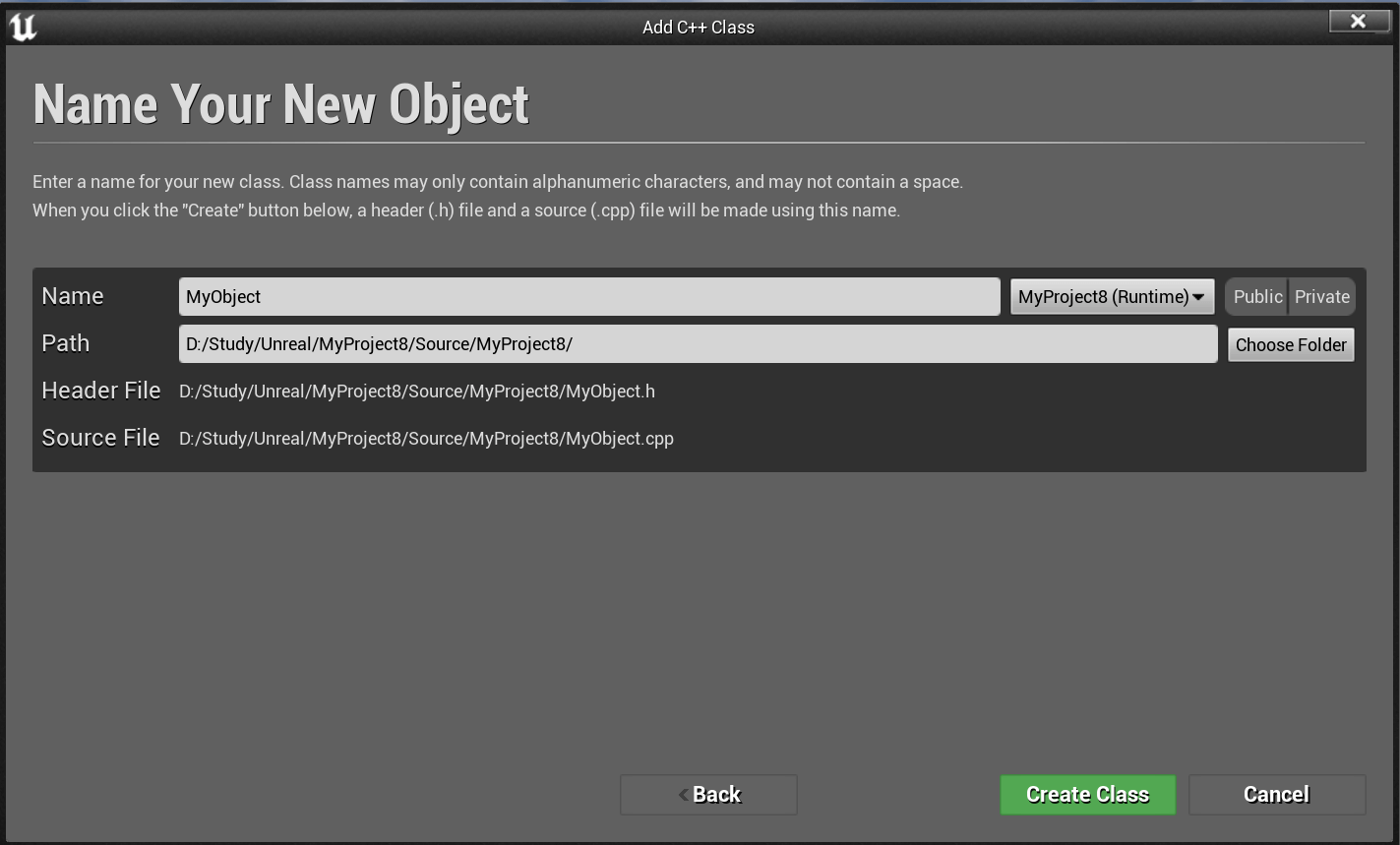
名字取为 MyObject,则会生成 MyObject.cppMyObject.h 两个文件。

.cpp 文件是写逻辑用的,.h 文件是写声明用的。

修改 MyObject.h 文件,然后保存:

C++
// Fill out your copyright notice in the Description page of Project Settings.
 
#pragma once
 
#include "CoreMinimal.h"
#include "UObject/NoExportTypes.h"
#include "MyObject.generated.h"
 
/**
 * 
 */
UCLASS(Blueprintable)
class MYPROJECT8_API UMyObject : public UObject
{
	GENERATED_BODY()
};
通过在类声明前添加 UCLASS(Blueprintable) 宏,可以让该类在 UE4 的蓝图编辑器中可见,允许开发者使用蓝图来创建该类的实例、设置属性和调用函数(在蓝图脚本中调用 C++ 的内容)。

png

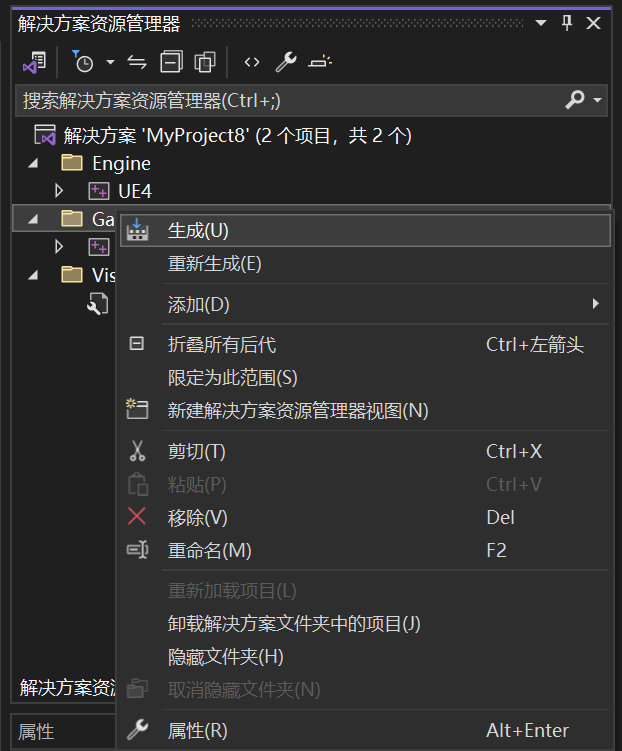
可以用 VS 的生成进行编译(有可能 UE4 没反应过来,但可以方便地显示中文的报错信息)。

png

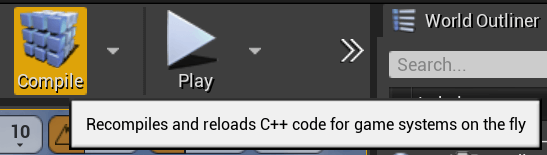
也可以用 UE4 的 Compile 按钮编译。

png

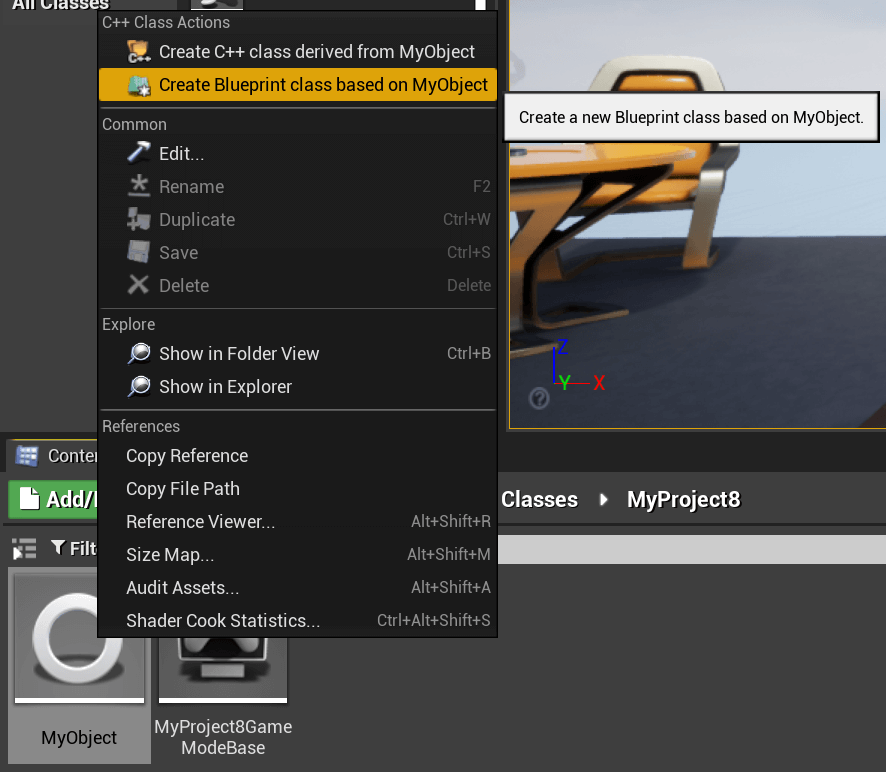
此时所创建的类就可以 Create Blueprint class based on MyObject

304-加快 Unreal 编译速度

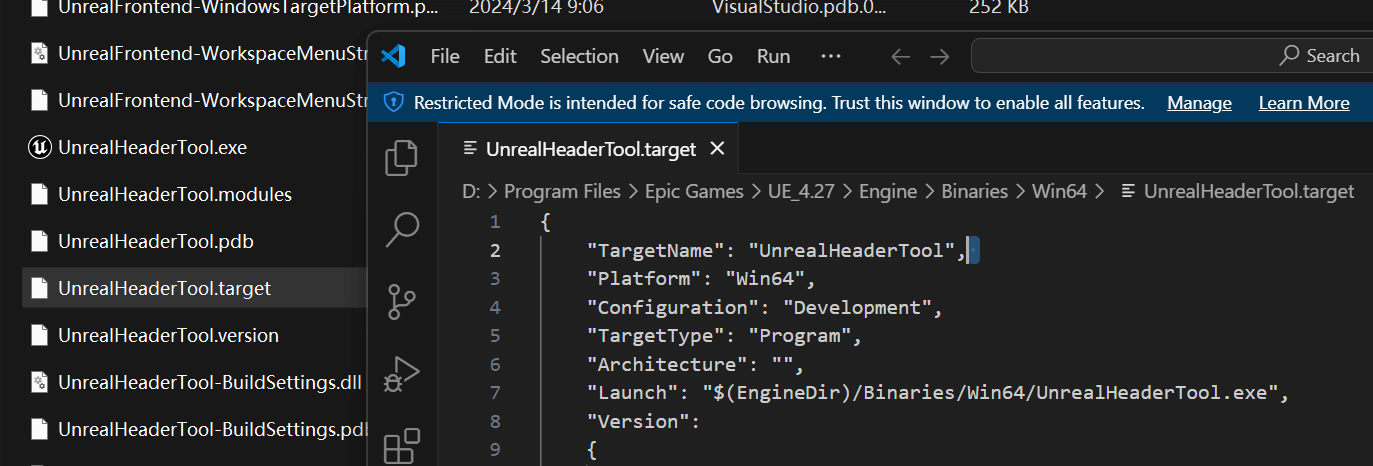
UE4.22 中,每次编译都会重新生成反射代码,影响编译速度(不知道 4.27 还有没有……)。

课程中提到的解决方案是,安装路径下找到 Win64/UnrealHeaderTool.target,往其中的第二行加一个空格……真玄学。

png

305-创建 UObject 的蓝图类与基础宏参数介绍

png

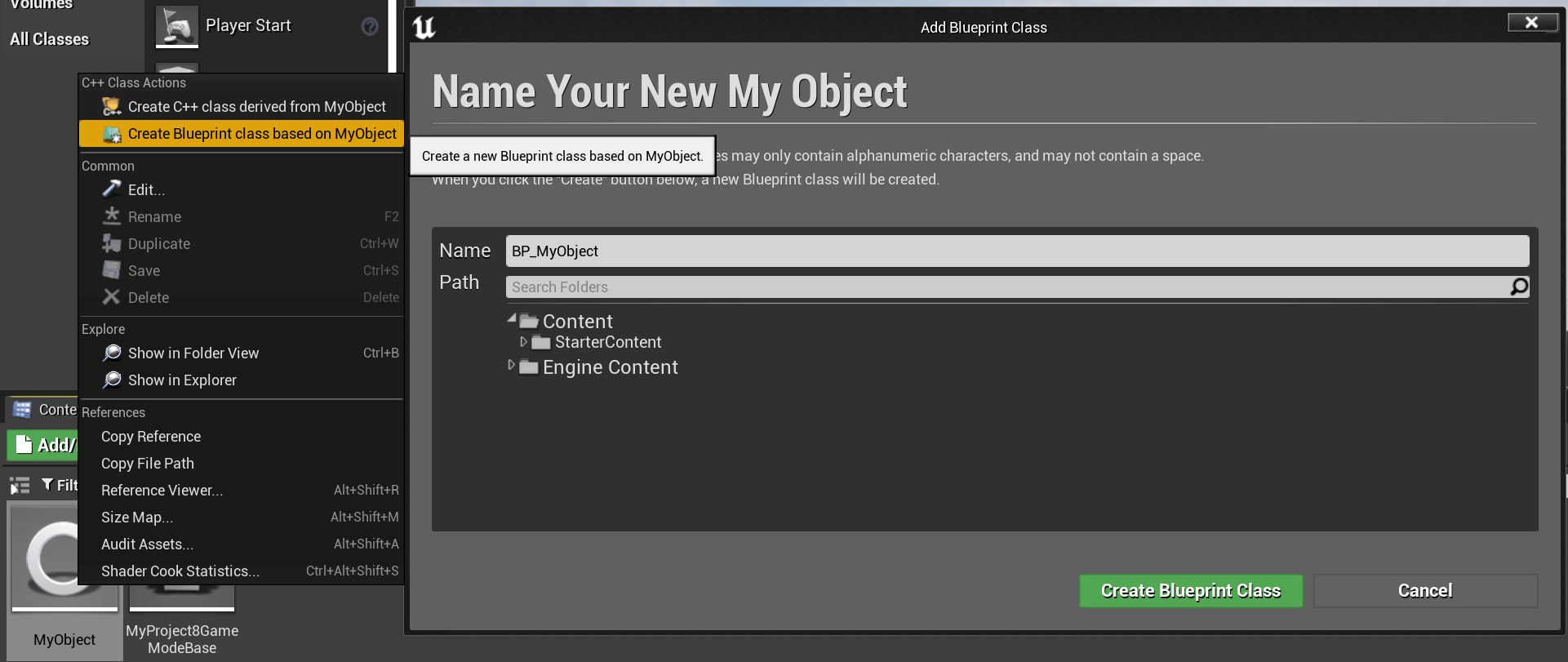
对于之前所创建的 MyObject 类,选择 Create Blueprint class based on MyObject 以创建一个反射的蓝图,命名为 BP_MyObject

编写 MyObject.h 的代码,给 MyObject 定义一个构造函数、float 类型变量 MyFloat,函数 MyFunction(),添加宏 UPROPERTY(BlueprintReadWrite) 使得变量和函数能在蓝图类中读写:

C++
// Fill out your copyright notice in the Description page of Project Settings.
 
#pragma once
 
#include "CoreMinimal.h"
#include "UObject/NoExportTypes.h"
#include "MyObject.generated.h"
 
/**
 * 
 */
UCLASS(Blueprintable)
class MYPROJECT8_API UMyObject : public UObject
{
	GENERATED_BODY()
	
public:
	
	UMyObject();
 
	UPROPERTY(BlueprintReadWrite)
	float MyFloat;
 
	UFUNCTION(BlueprintCallable)
	void MyFunction();
};

MyObject.cpp 里写实现(暂为空):

C++
#include "MyObject.h"
 
UMyObject::UMyObject()
{
 
}
 
void UMyObject::MyFunction()
{
 
}

保存并编译。

png

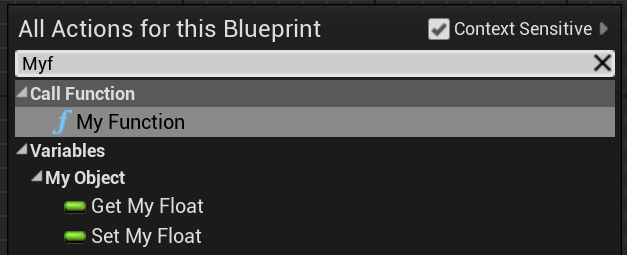
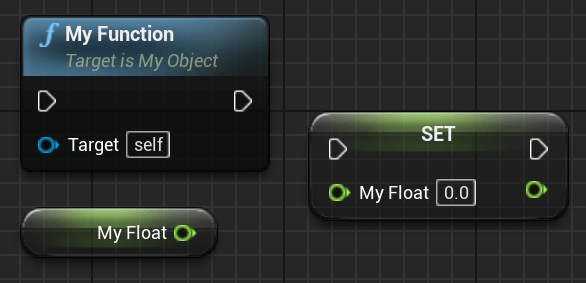
此时在对应的蓝图中就可以创建相关的节点。

png

试一试!

306-使用 UE_LOG 打印日志与在蓝图中实例化继承于 Object 的类

修改 MyObject.h,宏中可以定义变量/函数属于哪个 Category

C++
#pragma once
 
#include "CoreMinimal.h"
#include "UObject/NoExportTypes.h"
#include "MyObject.generated.h"
 
/**
 * 
 */
UCLASS(Blueprintable)
class MYPROJECT8_API UMyObject : public UObject
{
	GENERATED_BODY()
	
public:
	
	UMyObject();
 
	UPROPERTY(BlueprintReadWrite, Category = "My Variables")
	float MyFloat;
 
	UFUNCTION(BlueprintCallable, Category = "My Functions")
	void MyFunction();
};

MyObject.cpp 中写 MyFunction() 的实现,UE_LOG() 可以向控制台输出信息:

C++
#include "MyObject.h"
 
UMyObject::UMyObject()
{
	MyFloat = 0.0f;
}
 
void UMyObject::MyFunction()
{
	UE_LOG(LogTemp, Log, TEXT("Hello World!"));
	UE_LOG(LogTemp, Warning, TEXT("Hello World!"));
	UE_LOG(LogTemp, Error, TEXT("Hello World!"));
}
png

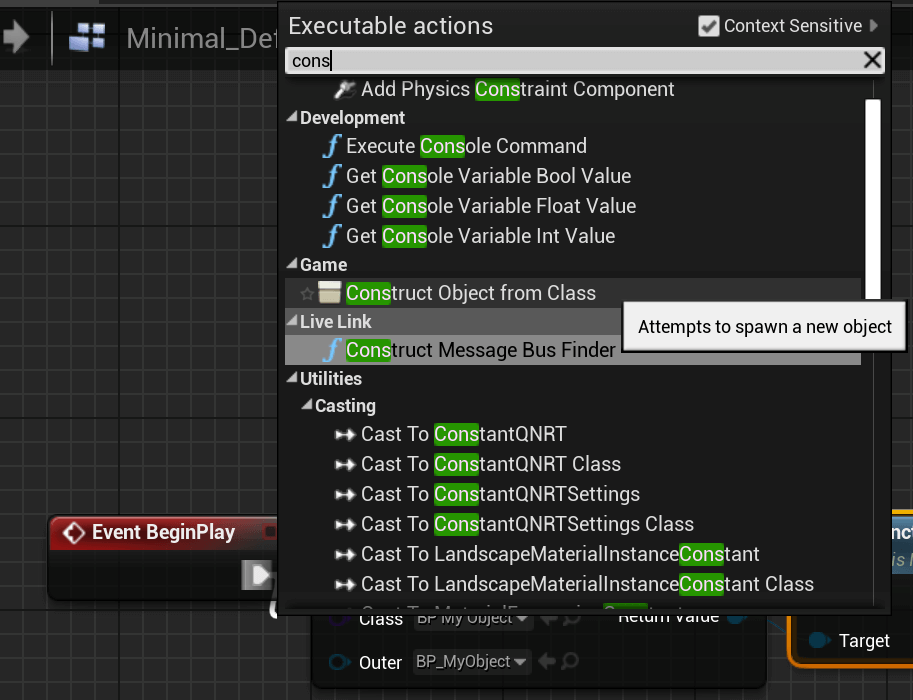
在关卡蓝图中,Construct Object from Class 可以将某个类实例化。

png

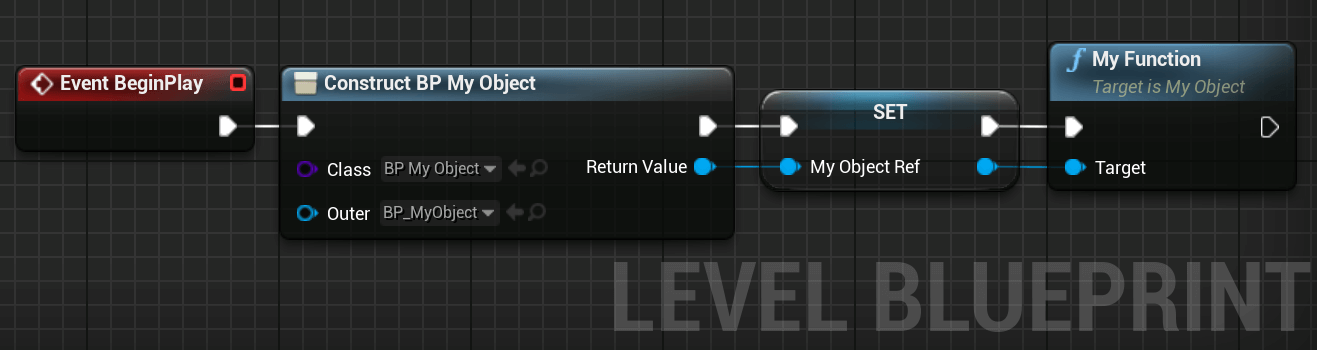
这么画关卡蓝图,实例化 BP_MyObject 类,调用其中的 MyFunction()

png

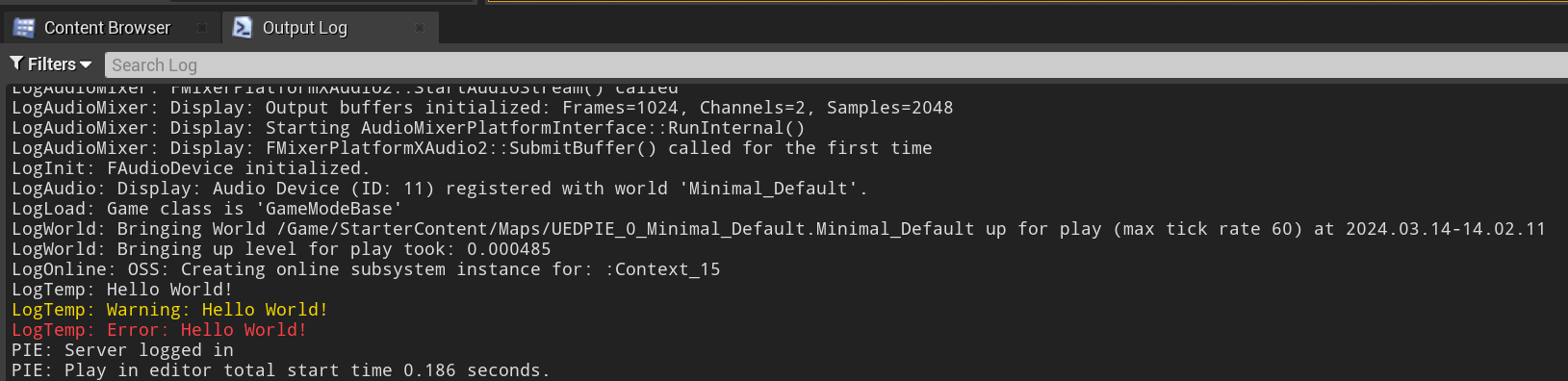
开跑!此时就会在 OutputLog 里输出相应信息。

307-如何删除自定义的 C++ 类

401-创建自己的 Actor 子类与学习类的命名规范

png

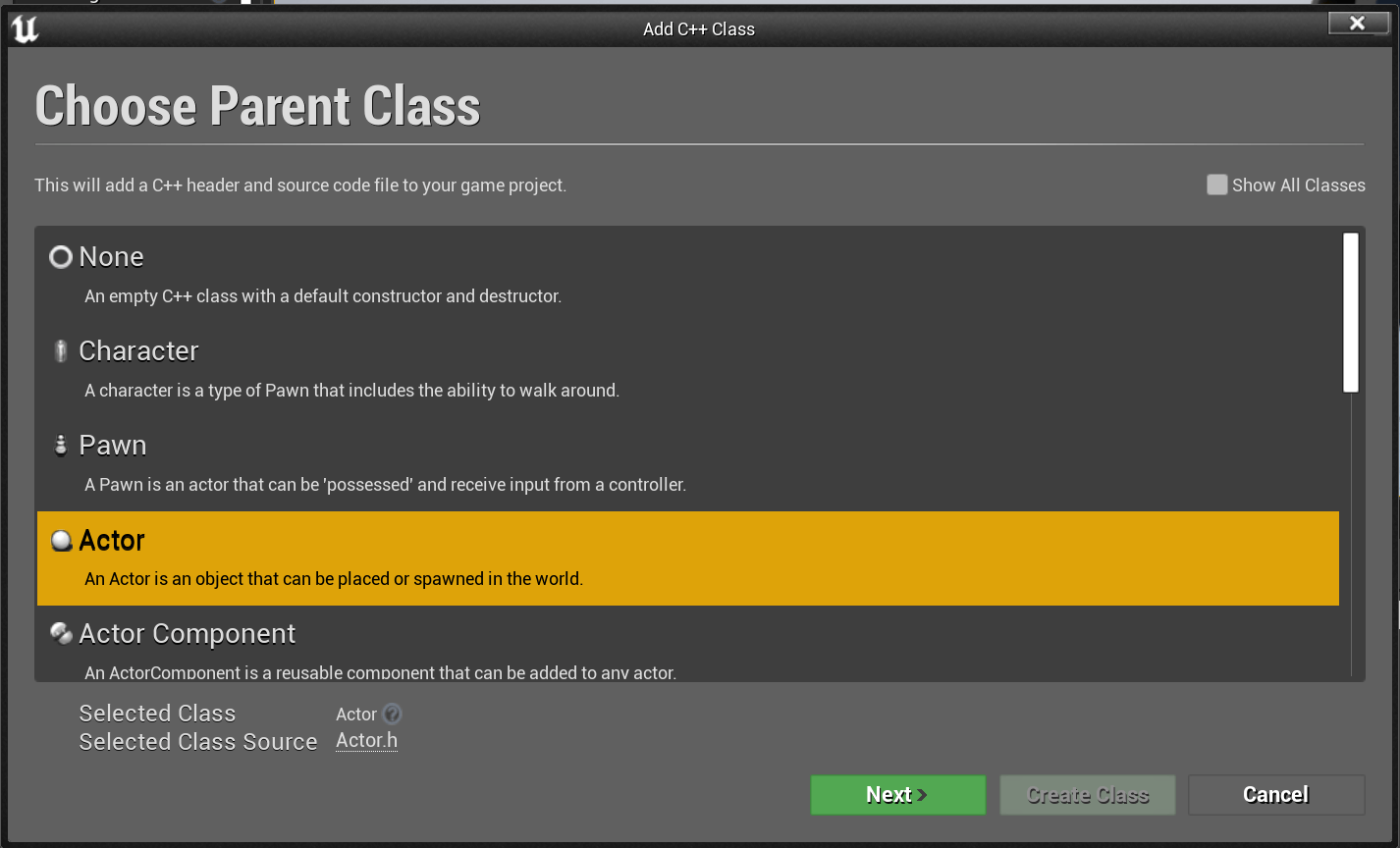
创建一个 Actor 的 C++ class。

png

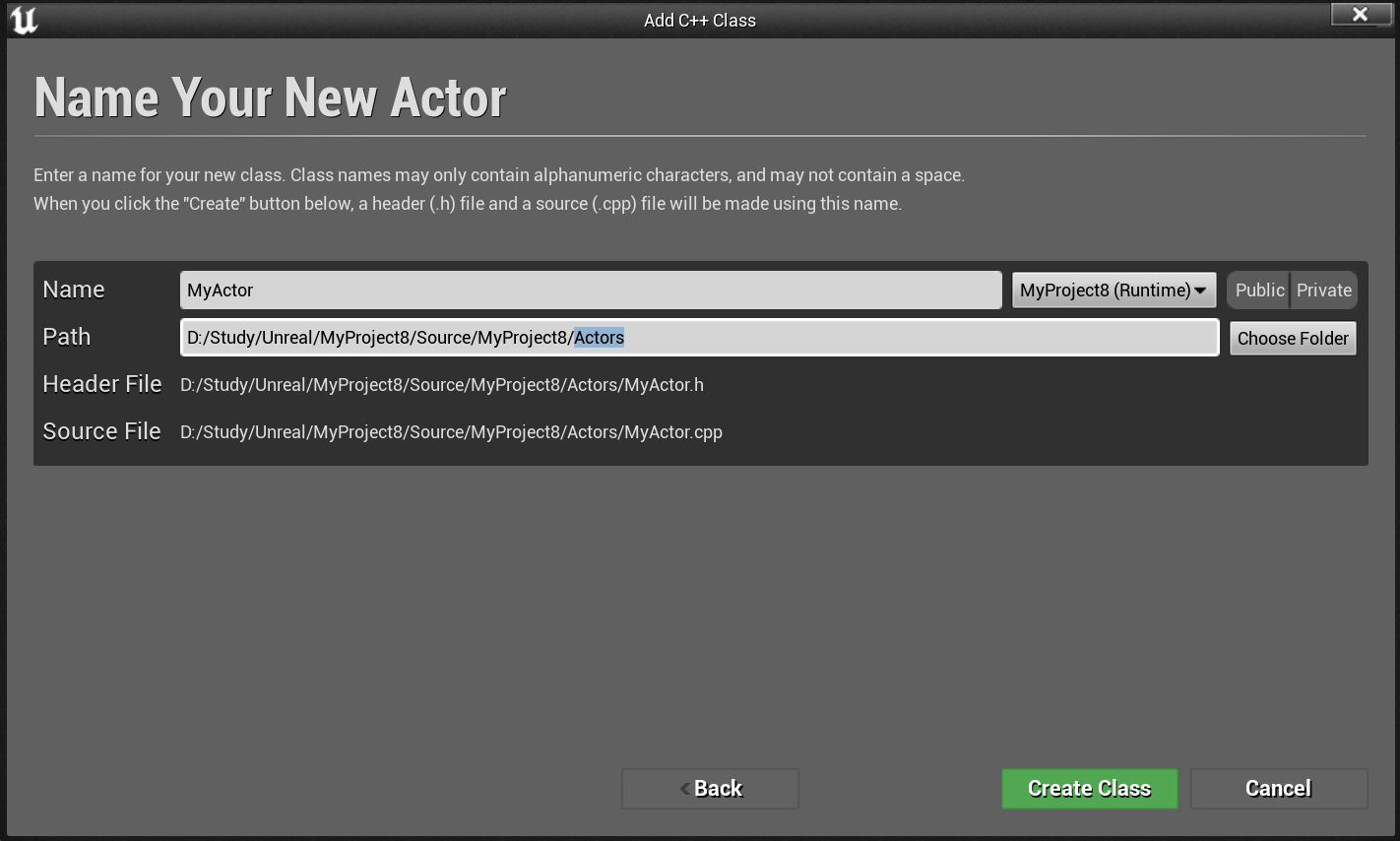
路径保持默认(源教程在 Path 里添油加醋了个 /Actor 结果我这里编译出错,好像不太聪明的样子……算了我还是妥协好了,后来又想了想可能要改一下 #include "MyActor.h" 的位置),之后创建好了 MyActor.hMyActor.cpp

看一下 MyActor.cpp,感觉很像 Unity 里的 Start()Update()

C++
#include "MyActor.h"
 
// Sets default values
AMyActor::AMyActor()
{
 	// Set this actor to call Tick() every frame.  You can turn this off to improve performance if you don't need it.
	PrimaryActorTick.bCanEverTick = true;
}
 
// Called when the game starts or when spawned
void AMyActor::BeginPlay()
{
	Super::BeginPlay();
}
 
// Called every frame
void AMyActor::Tick(float DeltaTime)
{
	Super::Tick(DeltaTime);
}
  • 派生自 Actor 的类带有 A 前缀,如 AController
  • 派生自 Object 的类带有 U 前缀,如 UComponent
  • Enums 的前缀是 E,如 EFortificationType
  • Interface 的前缀通常是 I,如 lAbilitySystemInterface
  • Template 的前缀是 T,如 TArray
  • 派生自 SWidget 的类 (Slate Ul) 带有前缀 S,如 SButton
  • 其他类的前缀为字母 F,如 FVector

看一看 MyActor.h 里的内容,虽然 UCLASS() 没有 Blueprintable,但是也可以执行 Create Blueprint class based on MyObject,这是因为所继承的类 AActor 自带 Blueprintable

C++
#pragma once
 
#include "CoreMinimal.h"
#include "GameFramework/Actor.h"
#include "MyActor.generated.h"
 
UCLASS()
class MYPROJECT8_API AMyActor : public AActor
{
	GENERATED_BODY()
	
public:	
	// Sets default values for this actor's properties
	AMyActor();
 
protected:
	// Called when the game starts or when spawned
	virtual void BeginPlay() override;
 
public:	
	// Called every frame
	virtual void Tick(float DeltaTime) override;
};

402-组件简介与使用蓝图类扩展代码的优点

略。这个蓝图跟 Unity 里的 prefab 蛮像的。

403-在 C++ 中创建静态网格组件

编辑 MyActor.h 里的内容,声明一个变量 UStaticMeshComponent* MyStaticMesh

C++
#pragma once
 
#include "CoreMinimal.h"
#include "GameFramework/Actor.h"
#include "MyActor.generated.h"
 
UCLASS()
class MYPROJECT8_API AMyActor : public AActor
{
	GENERATED_BODY()
	
public:	
	// Sets default values for this actor's properties
	AMyActor();
 
	UPROPERTY(VisibleAnywhere, Category = "My Actor Components")
	UStaticMeshComponent* MyStaticMesh;
 
protected:
	// Called when the game starts or when spawned
	virtual void BeginPlay() override;
 
public:	
	// Called every frame
	virtual void Tick(float DeltaTime) override;
};
 

编辑 MyActor.cpp 里的内容,在构造函数里设置 MyStaticMesh 里的值:

C++
#include "MyActor.h"
 
// Sets default values
AMyActor::AMyActor()
{
 	// Set this actor to call Tick() every frame.  You can turn this off to improve performance if you don't need it.
	PrimaryActorTick.bCanEverTick = true;
 
	MyStaticMesh = CreateDefaultSubobject<UStaticMeshComponent>(TEXT("MyStaticMesh"));
}
 
// Called when the game starts or when spawned
void AMyActor::BeginPlay()
{
	Super::BeginPlay();
}
 
// Called every frame
void AMyActor::Tick(float DeltaTime)
{
	Super::Tick(DeltaTime);
}
png

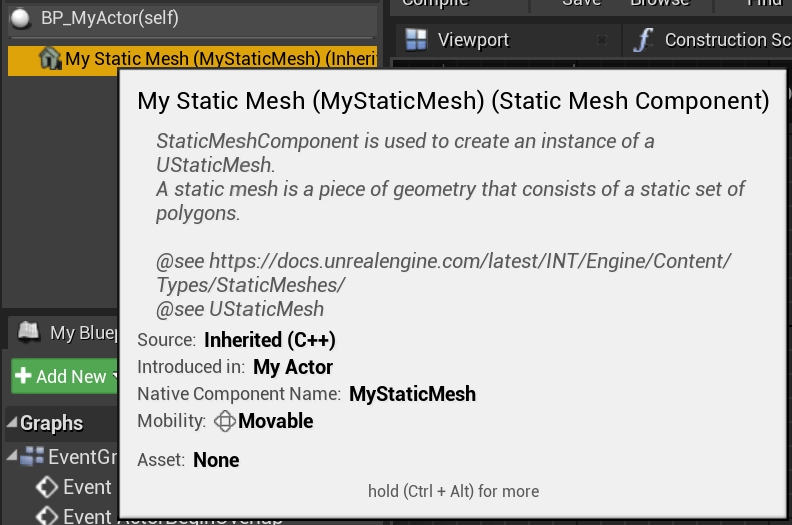
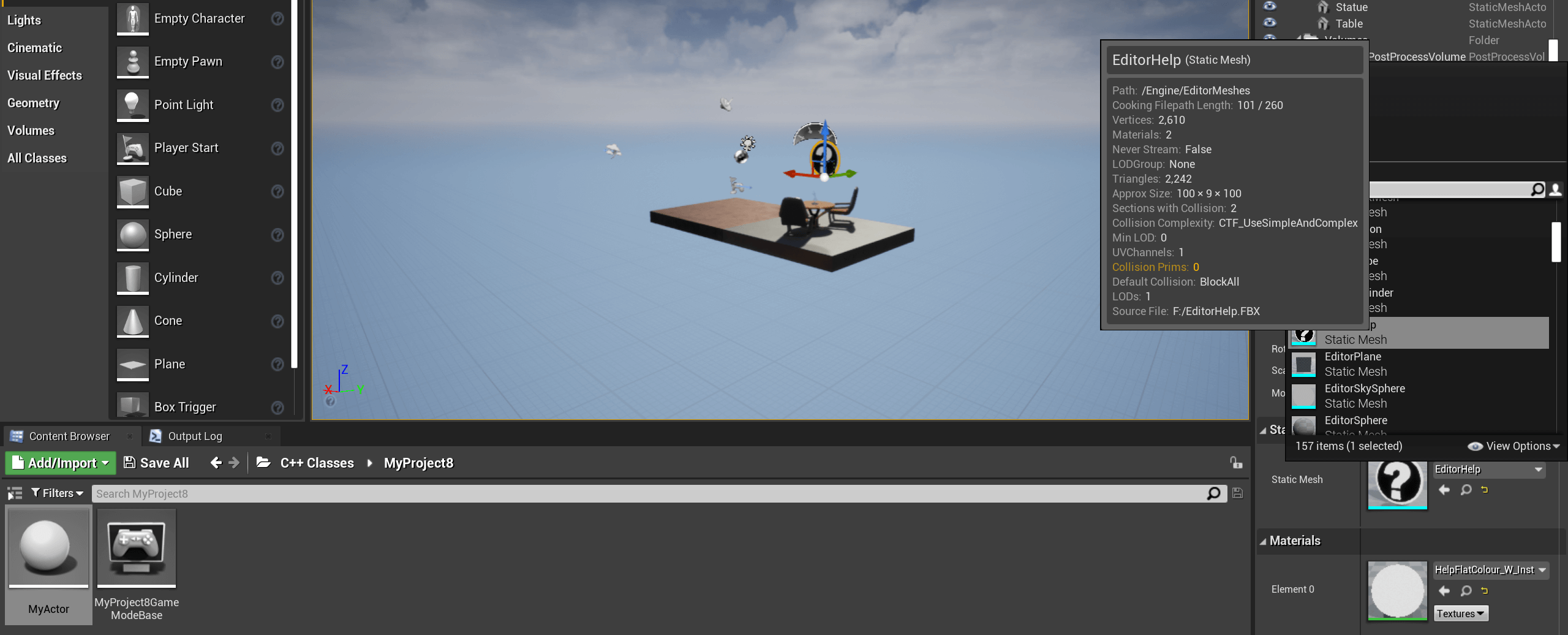
如此做,对应的蓝图里就会显示构造函数创建的 MyStaticMesh

png

也可以不用蓝图直接将定义的 C++ class 拖到关卡中。

404-导入模型与布置场景

略。

405-使用 SetActorLoction 控制位置与宏参数 EditInstanceOnly 介绍

修改 MyActor.h 的内容,添加一个 FVector 类型的变量 InitLocation,上面添加修饰宏 UPROPERTY(EditInstanceOnly, Category = "My Actor Properties | Vector"),让这个值可以在实例中编辑:

C++
#pragma once
 
#include "CoreMinimal.h"
#include "GameFramework/Actor.h"
#include "MyActor.generated.h"
 
UCLASS()
class MYPROJECT8_API AMyActor : public AActor
{
	GENERATED_BODY()
	
public:	
	// Sets default values for this actor's properties
	AMyActor();
 
	UPROPERTY(VisibleAnywhere, Category = "My Actor Components")
	UStaticMeshComponent* MyStaticMesh;
 
	UPROPERTY(EditInstanceOnly, Category = "My Actor Properties | Vector")
	FVector InitLocation;
 
protected:
	// Called when the game starts or when spawned
	virtual void BeginPlay() override;
 
public:	
	// Called every frame
	virtual void Tick(float DeltaTime) override;
};

修改 MyActor.cpp 里的内容,在 BeginPlay() 中将 Actor 的坐标设为 InitLocation 的值。

C++
#include "MyActor.h"
 
// Sets default values
AMyActor::AMyActor()
{
 	// Set this actor to call Tick() every frame.  You can turn this off to improve performance if you don't need it.
	PrimaryActorTick.bCanEverTick = true;
 
	MyStaticMesh = CreateDefaultSubobject<UStaticMeshComponent>(TEXT("MyStaticMesh"));
	InitLocation = FVector(0.0f);
}
 
// Called when the game starts or when spawned
void AMyActor::BeginPlay()
{
	Super::BeginPlay();
	
	SetActorLocation(InitLocation);
}
 
// Called every frame
void AMyActor::Tick(float DeltaTime)
{
	Super::Tick(DeltaTime);
}
png

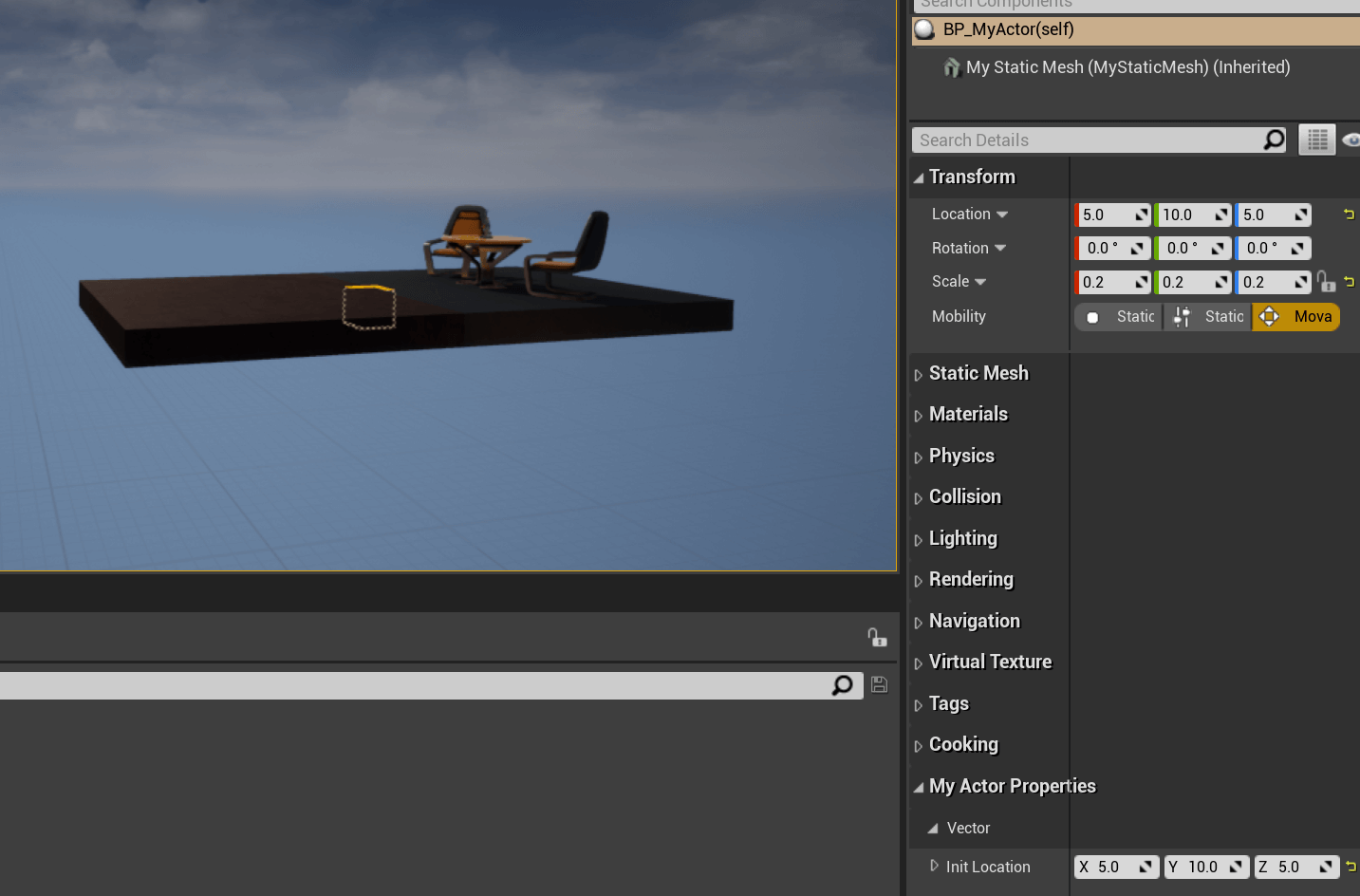
在蓝图实例中多了个设置 InitLocation 的地方,运行关卡会发现蓝图实例被正确地移动到了 InitLocation 的位置。

406-VisibleInstanceOnly 与 EditDefaultsOnly

修改 MyActor.h 里的内容,引入了两个新的宏参数:

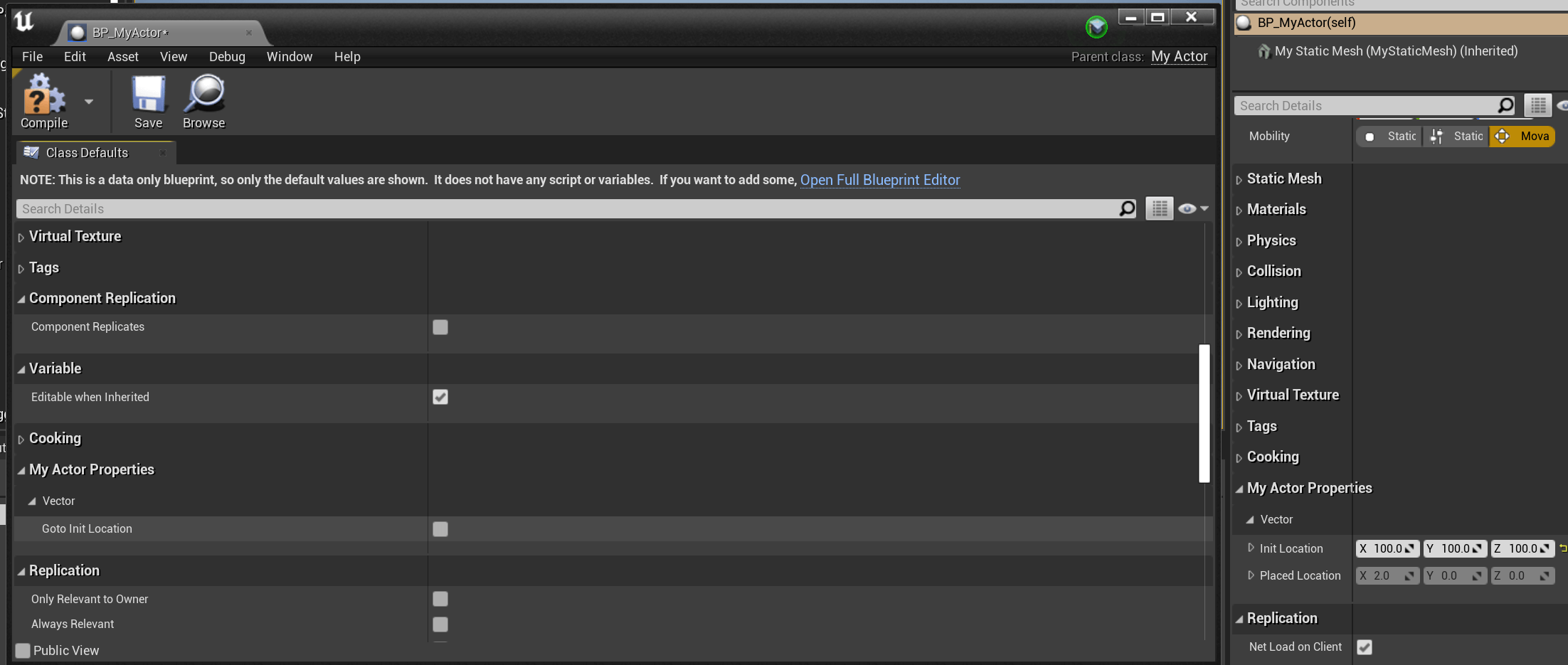
  • VisibleInstanceOnly 只在实例中可见,不可编辑。
  • EditDefaultsOnly 只可在模板中编辑。

bool 变量命名前加上前缀 b,UE 会自动识别并把前缀去除。

C++
#pragma once
 
#include "CoreMinimal.h"
#include "GameFramework/Actor.h"
#include "MyActor.generated.h"
 
UCLASS()
class MYPROJECT8_API AMyActor : public AActor
{
	GENERATED_BODY()
	
public:	
	// Sets default values for this actor's properties
	AMyActor();
 
	UPROPERTY(VisibleAnywhere, Category = "My Actor Components")
	UStaticMeshComponent* MyStaticMesh;
 
	UPROPERTY(EditInstanceOnly, Category = "My Actor Properties | Vector")
	FVector InitLocation;
 
	UPROPERTY(VisibleInstanceOnly, Category = "My Actor Properties | Vector")
	FVector PlacedLocation;
 
	UPROPERTY(EditDefaultsOnly, Category = "My Actor Properties | Vector")
	bool bGotoInitLocation;
 
protected:
	// Called when the game starts or when spawned
	virtual void BeginPlay() override;
 
public:	
	// Called every frame
	virtual void Tick(float DeltaTime) override;
};

修改 MyActor.cpp 里的内容:

C++
#include "MyActor.h"
 
// Sets default values
AMyActor::AMyActor()
{
 	// Set this actor to call Tick() every frame.  You can turn this off to improve performance if you don't need it.
	PrimaryActorTick.bCanEverTick = true;
 
	MyStaticMesh = CreateDefaultSubobject<UStaticMeshComponent>(TEXT("MyStaticMesh"));
	InitLocation = FVector(0.0f);
	PlacedLocation = FVector(0.0f);
	bGotoInitLocation = false;
}
 
// Called when the game starts or when spawned
void AMyActor::BeginPlay()
{
	Super::BeginPlay();
	
	PlacedLocation = GetActorLocation();
	if (bGotoInitLocation)
		SetActorLocation(InitLocation);
}
 
// Called every frame
void AMyActor::Tick(float DeltaTime)
{
	Super::Tick(DeltaTime);
}
png

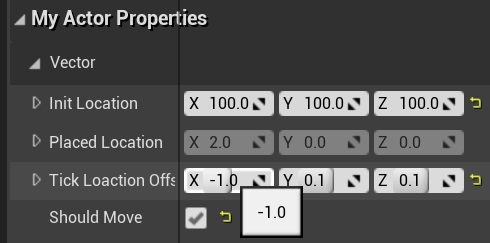
开跑!可以看到宏变量 VisibleAnywhereEditInstanceOnlyVisibleInstanceOnlyEditDefaultsOnly 之间的区别。

407-VisibleDefaultsOnly 与 EditAnywhere

修改 MyActor.h 的内容,引入了两个新的宏参数:

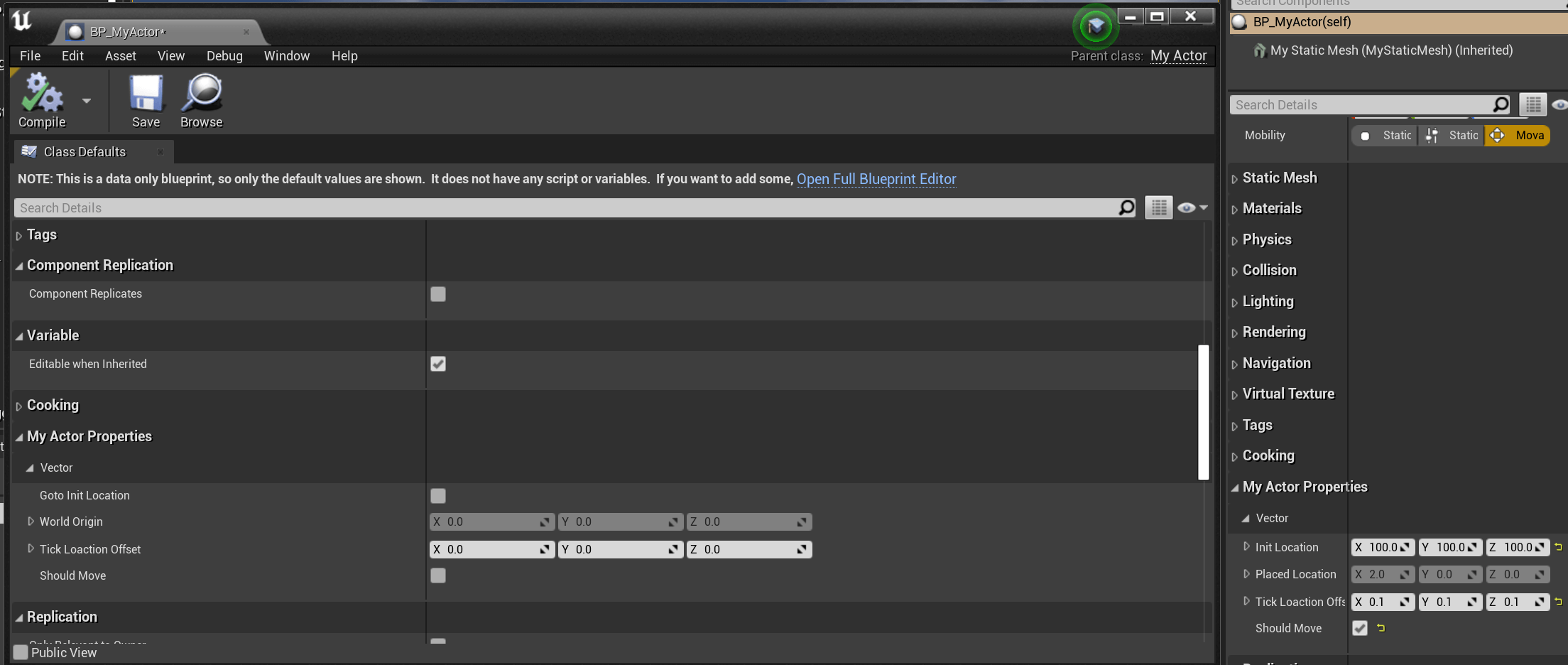
  • VisibleDefaultsOnly 只在模板中可见(没有地方可以编辑,一般没什么卵用)。
  • EditAnywhere 在模板类和实例类中均可编辑。
C++
#pragma once
 
#include "CoreMinimal.h"
#include "GameFramework/Actor.h"
#include "MyActor.generated.h"
 
UCLASS()
class MYPROJECT8_API AMyActor : public AActor
{
	GENERATED_BODY()
	
public:	
	// Sets default values for this actor's properties
	AMyActor();
 
	UPROPERTY(VisibleAnywhere, Category = "My Actor Components")
	UStaticMeshComponent* MyStaticMesh;
 
	UPROPERTY(EditInstanceOnly, Category = "My Actor Properties | Vector")
	FVector InitLocation;
 
	UPROPERTY(VisibleInstanceOnly, Category = "My Actor Properties | Vector")
	FVector PlacedLocation;
 
	UPROPERTY(EditDefaultsOnly, Category = "My Actor Properties | Vector")
	bool bGotoInitLocation;
 
	UPROPERTY(VisibleDefaultsOnly, Category = "My Actor Properties | Vector")
	FVector WorldOrigin;
 
	UPROPERTY(EditAnywhere, Category = "My Actor Properties | Vector")
	FVector TickLoactionOffset;
 
	UPROPERTY(EditAnywhere, Category = "My Actor Properties | Vector")
	bool bShouldMove;
 
protected:
	// Called when the game starts or when spawned
	virtual void BeginPlay() override;
 
public:	
	// Called every frame
	virtual void Tick(float DeltaTime) override;
};

修改 MyActor.cpp 里的内容:

C++
#include "MyActor.h"
 
// Sets default values
AMyActor::AMyActor()
{
 	// Set this actor to call Tick() every frame.  You can turn this off to improve performance if you don't need it.
	PrimaryActorTick.bCanEverTick = true;
 
	MyStaticMesh = CreateDefaultSubobject<UStaticMeshComponent>(TEXT("MyStaticMesh"));
	InitLocation = FVector(0.0f);
	PlacedLocation = FVector(0.0f);
	bGotoInitLocation = false;
	WorldOrigin = FVector(0.0f);
	TickLoactionOffset = FVector(0.0f);
	bShouldMove = false;
}
 
// Called when the game starts or when spawned
void AMyActor::BeginPlay()
{
	Super::BeginPlay();
	
	PlacedLocation = GetActorLocation();
	if (bGotoInitLocation)
		SetActorLocation(InitLocation);
}
 
// Called every frame
void AMyActor::Tick(float DeltaTime)
{
	Super::Tick(DeltaTime);
 
	if (bShouldMove)
	{
		AddActorLocalOffset(TickLoactionOffset);
	}
}
png

开跑!此时实例会每帧沿方向 (0.1, 0.1, 0.1) 移动。

408-在编辑器中限制输入值的范围与不要将组件指针设为 EditAnywhere

不要将组件指针设为 EditAnywhere

C++
UPROPERTY(EditAnywhere, Category = "My Actor Components")
UStaticMeshComponent* MyStaticMesh;

不要这么做!生成的界面会十分复杂,不友好!


修改 MyActor.hTickLoactionOffset 的宏,如此做将在面板中限制变量的取值范围:

C++
UPROPERTY(EditAnywhere, Category = "My Actor Properties | Vector", meta = (ClampMin = -5.0f, ClampMax = 5.0f, UIMin = -5.0f, UIMax = 5.0f))
FVector TickLoactionOffset;
png

409-简单碰撞与复杂碰撞

教你认识 UE 里的碰撞,分为 简单碰撞复杂碰撞

png

410-模拟物理与重力

png

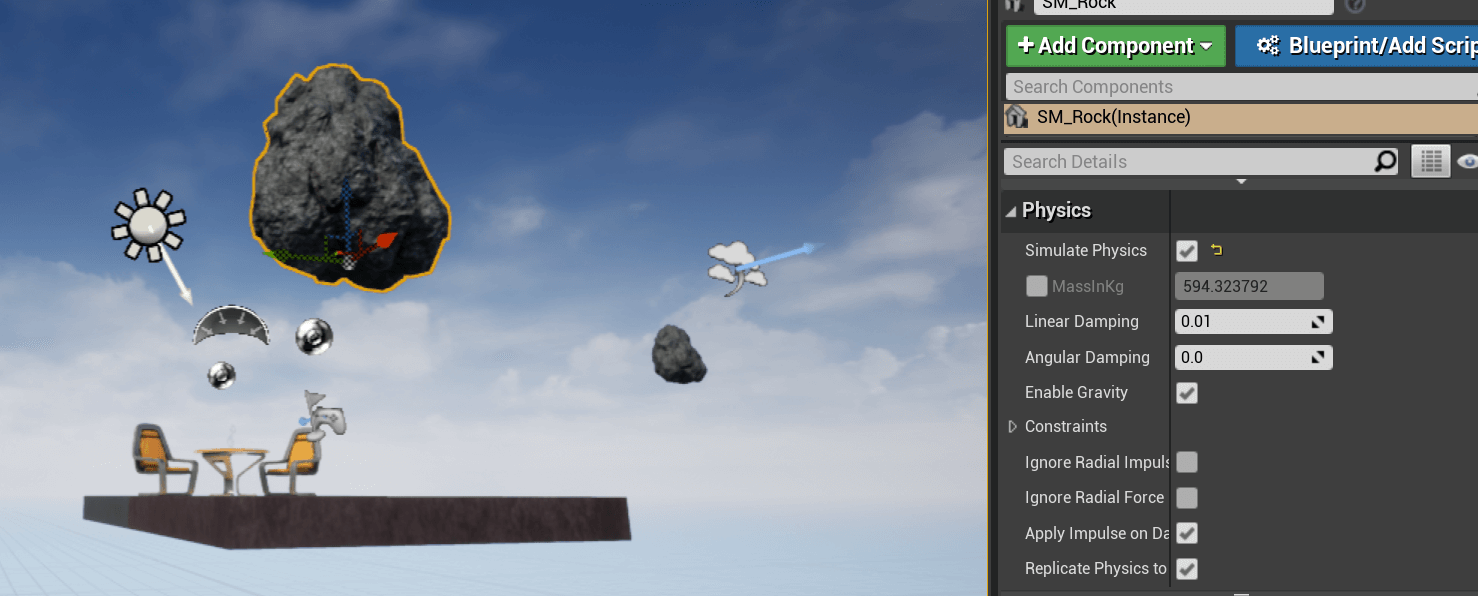
物体中若打开了 Physics 下的 Simulate Physics,则会开启物理。

png

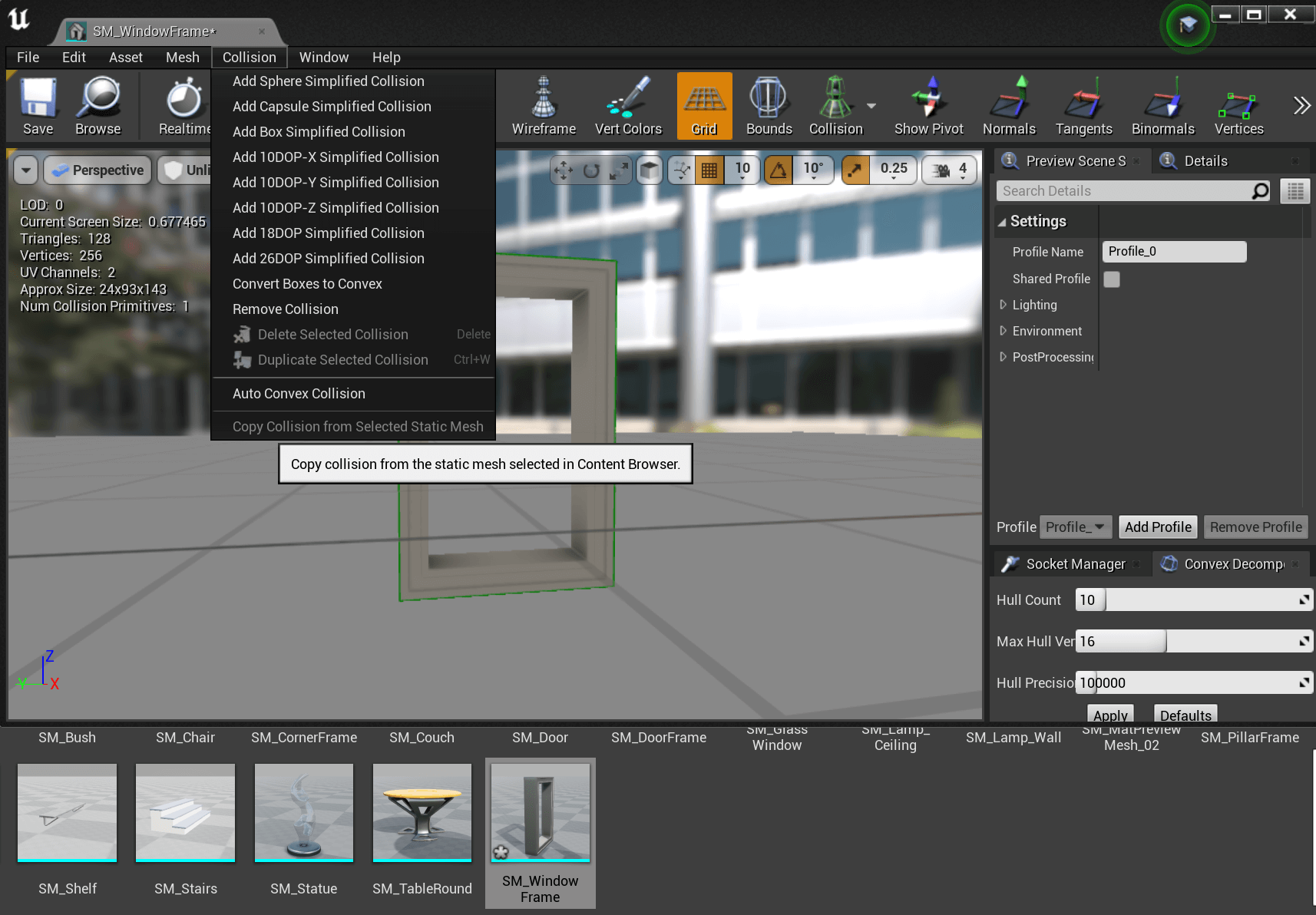
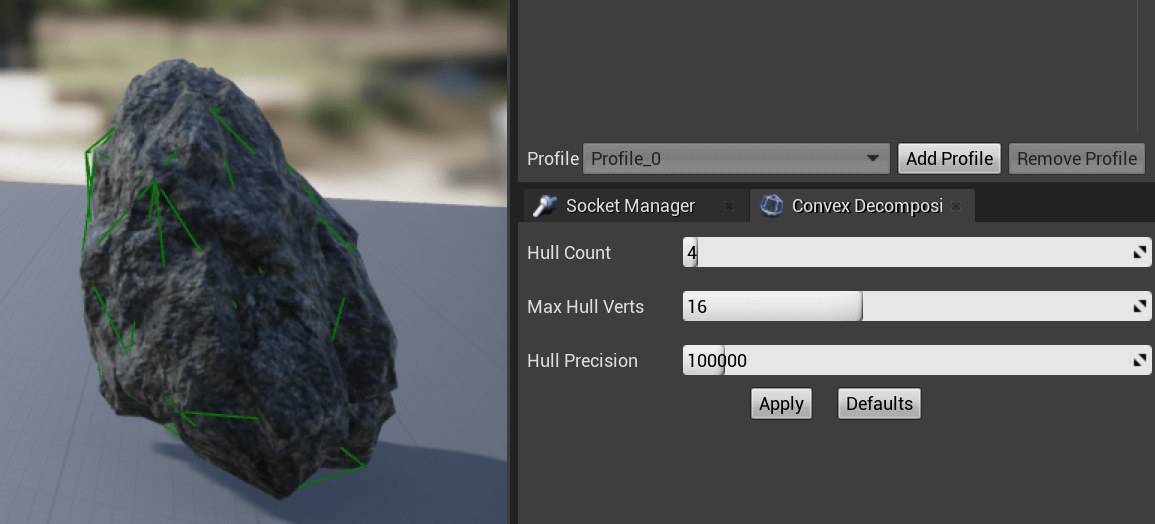
给这个物体加一个简单的凸包碰撞。

png

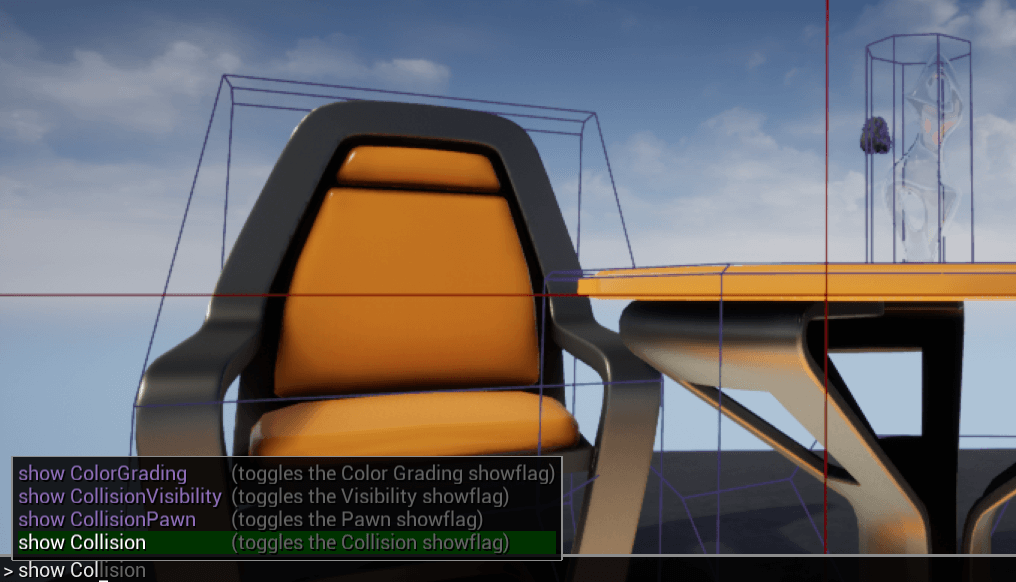
开跑!按下 `` 键可以打开命令行,输出show Collision` 即可在视图中显示碰撞的具体位置。

411-通过代码增加力与力矩

修改 MyActor.h 里的内容,添加了变量力 FVector InitForce、力矩 FVector InitTorque 和 纯改变加速度(施加力的时候忽略质量)bAccelChange

C++
#pragma once
 
#include "CoreMinimal.h"
#include "GameFramework/Actor.h"
#include "MyActor.generated.h"
 
UCLASS()
class MYPROJECT8_API AMyActor : public AActor
{
	GENERATED_BODY()
	
public:	
	// Sets default values for this actor's properties
	AMyActor();
 
	UPROPERTY(VisibleAnywhere, Category = "My Actor Components")
	UStaticMeshComponent* MyStaticMesh;
 
	UPROPERTY(EditInstanceOnly, Category = "My Actor Properties | Vector")
	FVector InitLocation;
 
	UPROPERTY(VisibleInstanceOnly, Category = "My Actor Properties | Vector")
	FVector PlacedLocation;
 
	UPROPERTY(EditDefaultsOnly, Category = "My Actor Properties | Vector")
	bool bGotoInitLocation;
 
	UPROPERTY(VisibleDefaultsOnly, Category = "My Actor Properties | Vector")
	FVector WorldOrigin;
 
	UPROPERTY(EditAnywhere, Category = "My Actor Properties | Vector", meta = (ClampMin = -5.0f, ClampMax = 5.0f, UIMin = -5.0f, UIMax = 5.0f))
	FVector TickLoactionOffset;
 
	UPROPERTY(EditAnywhere, Category = "My Actor Properties | Vector")
	bool bShouldMove;
 
	UPROPERTY(EditInstanceOnly, Category = "My Actor Properties | Physics")
	FVector InitForce;
 
	UPROPERTY(EditInstanceOnly, Category = "My Actor Properties | Physics")
	FVector InitTorque;
 
	UPROPERTY(EditInstanceOnly, Category = "My Actor Properties | Physics")
	bool bAccelChange;
 
protected:
	// Called when the game starts or when spawned
	virtual void BeginPlay() override;
 
public:	
	// Called every frame
	virtual void Tick(float DeltaTime) override;
};

修改 MyActor.cpp 里的内容:

C++
#include "MyActor.h"
#include "Components/StaticMeshComponent.h"
 
// Sets default values
AMyActor::AMyActor()
{
 	// Set this actor to call Tick() every frame.  You can turn this off to improve performance if you don't need it.
	PrimaryActorTick.bCanEverTick = true;
 
	MyStaticMesh = CreateDefaultSubobject<UStaticMeshComponent>(TEXT("MyStaticMesh"));
	InitLocation = FVector(0.0f);
	PlacedLocation = FVector(0.0f);
	bGotoInitLocation = false;
	WorldOrigin = FVector(0.0f);
	TickLoactionOffset = FVector(0.0f);
	bShouldMove = false;
	InitForce = FVector(0.0f);
	InitTorque = FVector(0.0f);
	bAccelChange = false;
}
 
// Called when the game starts or when spawned
void AMyActor::BeginPlay()
{
	Super::BeginPlay();
	
	PlacedLocation = GetActorLocation();
	if (bGotoInitLocation)
		SetActorLocation(InitLocation);
	MyStaticMesh->AddForce(InitForce, "NAME_None", bAccelChange);
	MyStaticMesh->AddTorque(InitForce, "NAME_None", bAccelChange);
}
 
// Called every frame
void AMyActor::Tick(float DeltaTime)
{
	Super::Tick(DeltaTime);
 
	if (bShouldMove)
	{
		AddActorLocalOffset(TickLoactionOffset);
	}
}

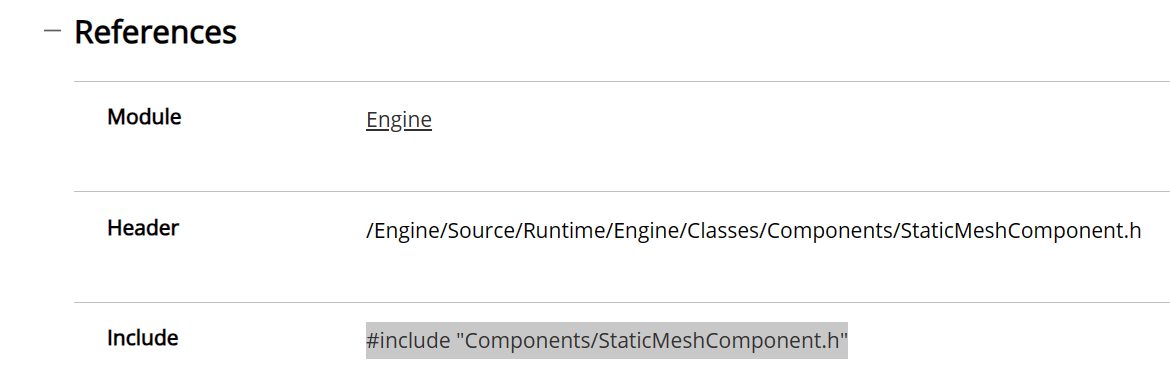
MyStaticMesh-> 默认不可用,需从官方文档查找 UStaticMeshComponent 的属性:UStaticMeshComponent | Unreal Engine 5.2 Documentation 得到需引入 #include "Components/StaticMeshComponent.h"

png

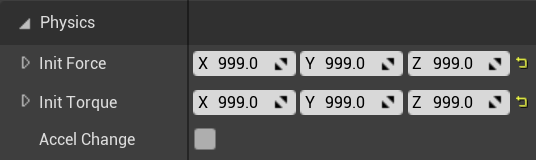
此时在实例类中便可设置给对象初始化的力和力矩。

png

412-使用 Sweep 在不开启模拟物理的情况下进行碰撞

在没有 Simulate Physics 的情况下,默认的碰撞是不会有效的,但是可以打开 Sweep 在不开启模拟物理的情况下进行碰撞。

png

修改 MyActor.cppAddActorLocalOffset(TickLoactionOffset, true); 便可在不使用物理的情况下进行碰撞:

C++
#include "MyActor.h"
#include "Components/StaticMeshComponent.h"
 
// Sets default values
AMyActor::AMyActor()
{
 	// Set this actor to call Tick() every frame.  You can turn this off to improve performance if you don't need it.
	PrimaryActorTick.bCanEverTick = true;
 
	MyStaticMesh = CreateDefaultSubobject<UStaticMeshComponent>(TEXT("MyStaticMesh"));
	InitLocation = FVector(0.0f);
	PlacedLocation = FVector(0.0f);
	bGotoInitLocation = false;
	WorldOrigin = FVector(0.0f);
	TickLoactionOffset = FVector(0.0f);
	bShouldMove = false;
	InitForce = FVector(0.0f);
	InitTorque = FVector(0.0f);
	bAccelChange = false;
}
 
// Called when the game starts or when spawned
void AMyActor::BeginPlay()
{
	Super::BeginPlay();
	
	PlacedLocation = GetActorLocation();
	if (bGotoInitLocation)
		SetActorLocation(InitLocation);
	//MyStaticMesh->AddForce(InitForce, "NAME_None", bAccelChange);
	//MyStaticMesh->AddTorque(InitForce, "NAME_None", bAccelChange);
}
 
// Called every frame
void AMyActor::Tick(float DeltaTime)
{
	Super::Tick(DeltaTime);
 
	if (bShouldMove)
	{
		AddActorLocalOffset(TickLoactionOffset, true);
	}
}

413-碰撞通道与击中信息

png

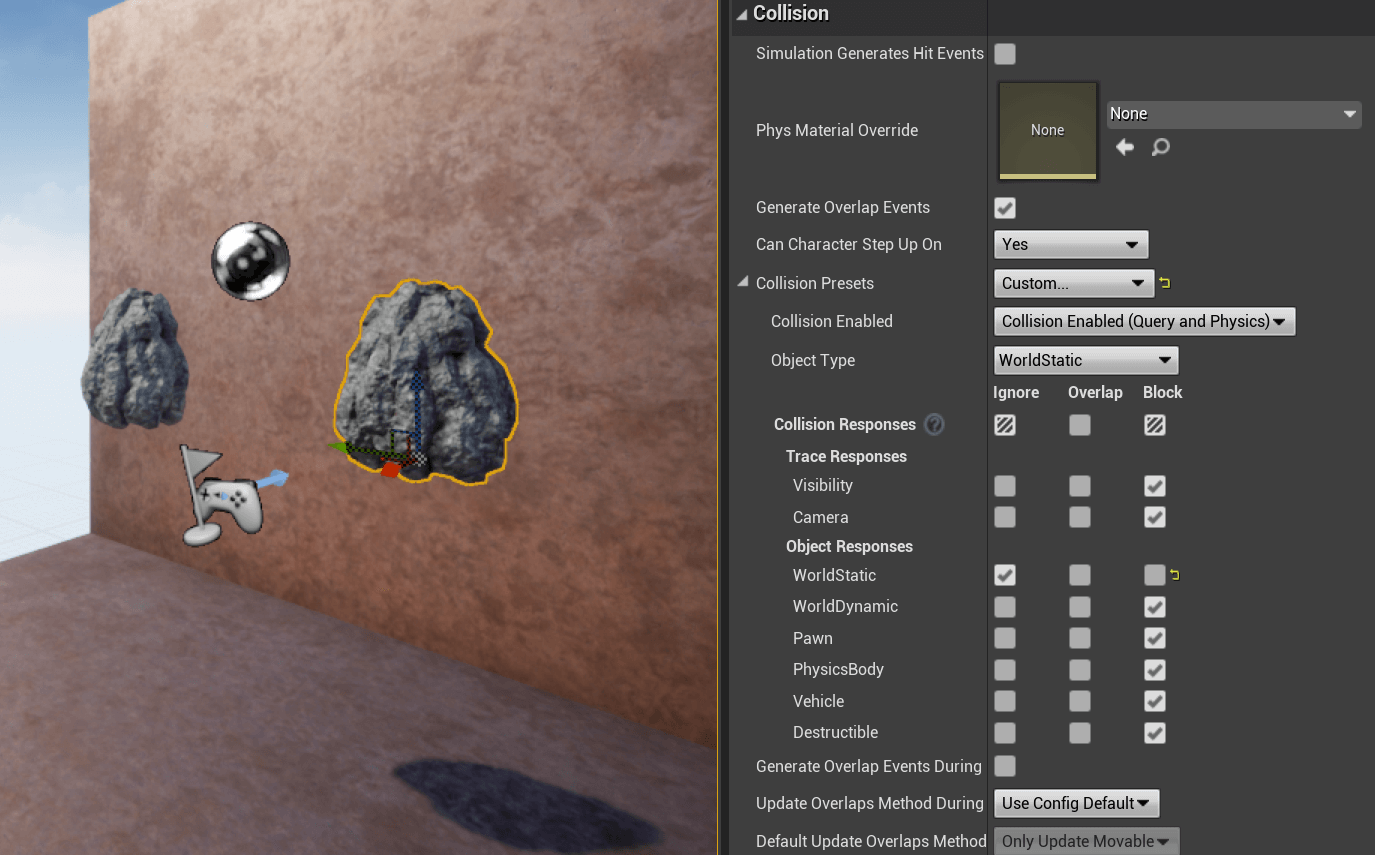
Collision 可以设置哪些碰撞有效,必须两个碰撞均是 Block 才可以阻挡。


修改 MyActor.cpp 里的内容,FHitResult HitResultAddActorLocalOffset(TickLoactionOffset, true, &HitResult); 可以获取碰撞信息:

C++
#include "MyActor.h"
#include "Components/StaticMeshComponent.h"
 
// Sets default values
AMyActor::AMyActor()
{
 	// Set this actor to call Tick() every frame.  You can turn this off to improve performance if you don't need it.
	PrimaryActorTick.bCanEverTick = true;
 
	MyStaticMesh = CreateDefaultSubobject<UStaticMeshComponent>(TEXT("MyStaticMesh"));
	InitLocation = FVector(0.0f);
	PlacedLocation = FVector(0.0f);
	bGotoInitLocation = false;
	WorldOrigin = FVector(0.0f);
	TickLoactionOffset = FVector(0.0f);
	bShouldMove = false;
	InitForce = FVector(0.0f);
	InitTorque = FVector(0.0f);
	bAccelChange = false;
}
 
// Called when the game starts or when spawned
void AMyActor::BeginPlay()
{
	Super::BeginPlay();
	
	PlacedLocation = GetActorLocation();
	if (bGotoInitLocation)
		SetActorLocation(InitLocation);
	//MyStaticMesh->AddForce(InitForce, "NAME_None", bAccelChange);
	//MyStaticMesh->AddTorque(InitForce, "NAME_None", bAccelChange);
}
 
// Called every frame
void AMyActor::Tick(float DeltaTime)
{
	Super::Tick(DeltaTime);
 
	if (bShouldMove)
	{
		FHitResult HitResult;
 
		AddActorLocalOffset(TickLoactionOffset, true, &HitResult);
		UE_LOG(LogTemp, Warning, TEXT("X: %f, Y: %f, Z: %f"), HitResult.Location.X, HitResult.Location.Y, HitResult.Location.Z);
	}
}
png

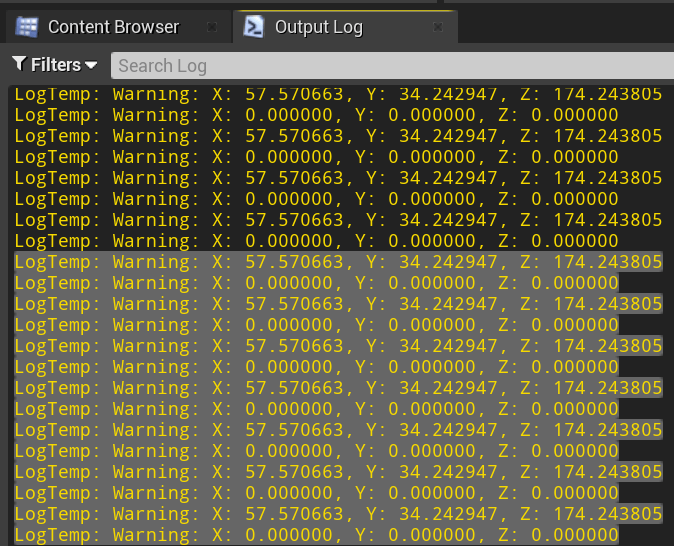
开跑!Output Log 将输出碰撞信息。

414-其他常用函数与可探索部分

略。

501-创建自己的 Pawn 类、自己的根组件并将静态网格组件附加到其上

png

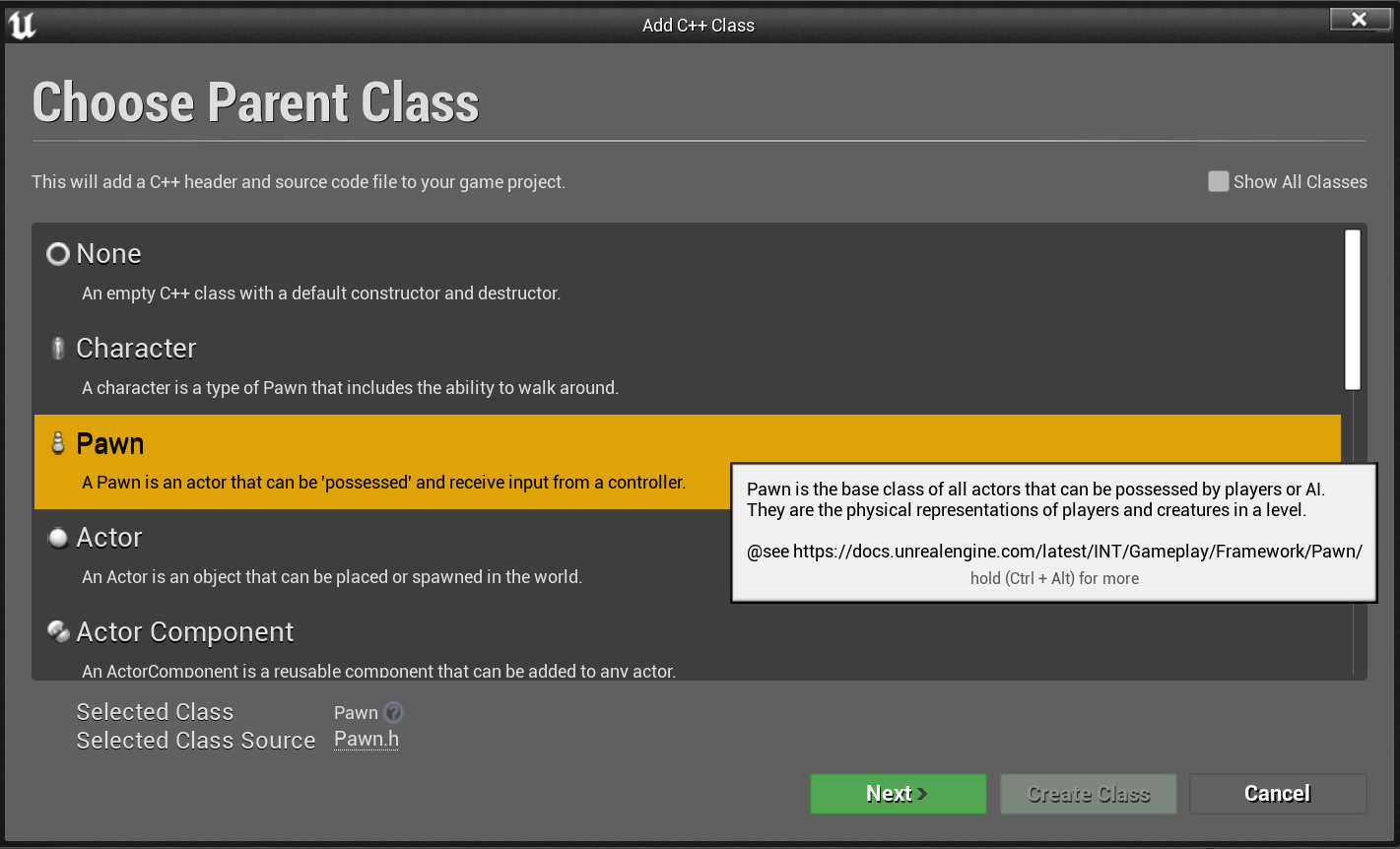
创建一个 Pawn 类型的 C++ Class,获得 MyPawn.hMyPawn.cpp

编辑 MyPawn.h,定义变量 class UStaticMeshComponent* MyStaticMesh;,这个 class 可加可不加:

C++
#include "CoreMinimal.h"
#include "GameFramework/Pawn.h"
#include "MyPawn.generated.h"
 
UCLASS()
class MYPROJECT8_API AMyPawn : public APawn
{
	GENERATED_BODY()
 
public:
	// Sets default values for this pawn's properties
	AMyPawn();
 
	UPROPERTY(VisibleAnywhere, Category = "My Pawn Components")
	class UStaticMeshComponent* MyStaticMesh;
 
protected:
	// Called when the game starts or when spawned
	virtual void BeginPlay() override;
 
public:	
	// Called every frame
	virtual void Tick(float DeltaTime) override;
 
	// Called to bind functionality to input
	virtual void SetupPlayerInputComponent(class UInputComponent* PlayerInputComponent) override;

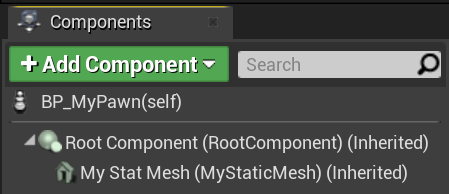
编辑 MyPawn.cpp,设置 RootComponent 的值(模板自带),设置 MyStaticMesh 的值并将其设为 RootComponent 的子节点:

C++
#include "MyPawn.h"
#include "Components/StaticMeshComponent.h"
 
// Sets default values
AMyPawn::AMyPawn()
{
 	// Set this pawn to call Tick() every frame.  You can turn this off to improve performance if you don't need it.
	PrimaryActorTick.bCanEverTick = true;
 
	RootComponent = CreateDefaultSubobject<USceneComponent>(TEXT("RootComponent"));
	MyStaticMesh = CreateDefaultSubobject<UStaticMeshComponent>(TEXT("MyStaticMesh"));
	MyStaticMesh->SetupAttachment(GetRootComponent());
}
 
// Called when the game starts or when spawned
void AMyPawn::BeginPlay()
{
	Super::BeginPlay();
}
 
// Called every frame
void AMyPawn::Tick(float DeltaTime)
{
	Super::Tick(DeltaTime);
}
 
// Called to bind functionality to input
void AMyPawn::SetupPlayerInputComponent(UInputComponent* PlayerInputComponent)
{
	Super::SetupPlayerInputComponent(PlayerInputComponent);
}

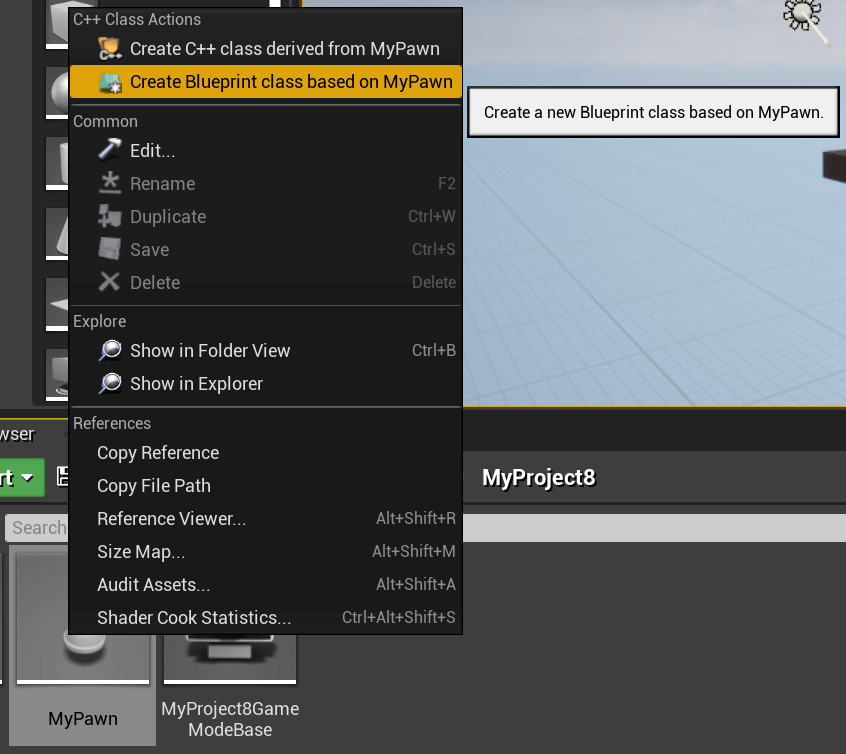
编译。Create Blueprint class based on MyPawn

png

开跑!

png

502-为自己的 Pawn 设置相机组件

修改 MyPawn.h,定义一个新的变量 class UCameraComponent* MyCamera;

C++
#pragma once
 
#include "CoreMinimal.h"
#include "GameFramework/Pawn.h"
#include "MyPawn.generated.h"
 
UCLASS()
class MYPROJECT8_API AMyPawn : public APawn
{
	GENERATED_BODY()
 
public:
	// Sets default values for this pawn's properties
	AMyPawn();
 
	UPROPERTY(VisibleAnywhere, Category = "My Pawn Components")
	class UStaticMeshComponent* MyStaticMesh;
 
	UPROPERTY(VisibleAnywhere, Category = "My Pawn Components")
	class UCameraComponent* MyCamera;
 
protected:
	// Called when the game starts or when spawned
	virtual void BeginPlay() override;
 
public:	
	// Called every frame
	virtual void Tick(float DeltaTime) override;
 
	// Called to bind functionality to input
	virtual void SetupPlayerInputComponent(class UInputComponent* PlayerInputComponent) override;
 
};

修改 MyPawn.cpp,设置好 MyCamera 的属性:

C++
#include "MyPawn.h"
#include "Components/StaticMeshComponent.h"
#include "Camera/CameraComponent.h"
 
// Sets default values
AMyPawn::AMyPawn()
{
 	// Set this pawn to call Tick() every frame.  You can turn this off to improve performance if you don't need it.
	PrimaryActorTick.bCanEverTick = true;
 
	RootComponent = CreateDefaultSubobject<USceneComponent>(TEXT("RootComponent"));
	MyStaticMesh = CreateDefaultSubobject<UStaticMeshComponent>(TEXT("MyStaticMesh"));
	MyStaticMesh->SetupAttachment(GetRootComponent());
 
	MyCamera = CreateDefaultSubobject<UCameraComponent>(TEXT("MyCamera"));
	MyCamera->SetupAttachment(GetRootComponent());
 
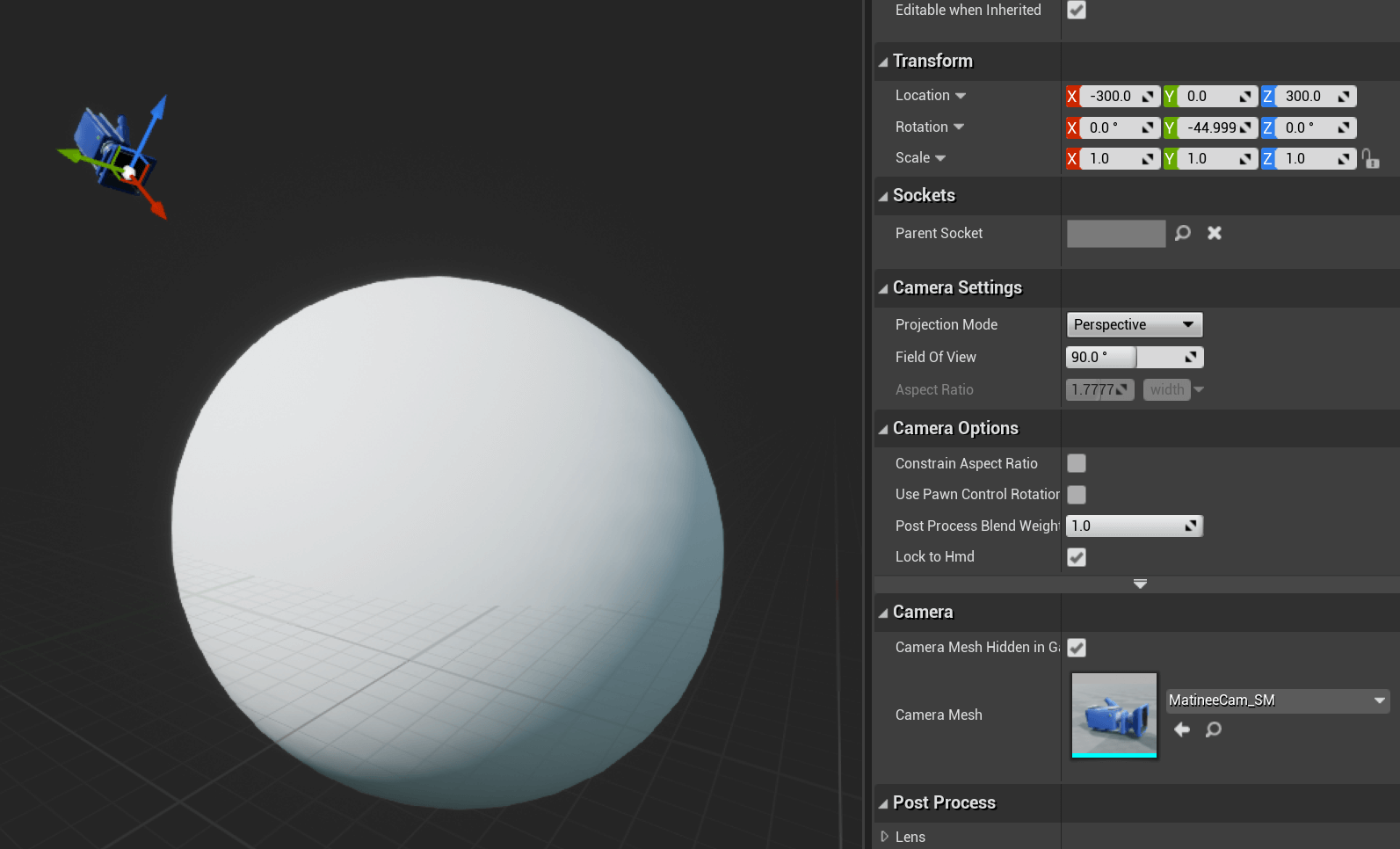
	MyCamera->SetRelativeLocation(FVector(-300.0f, 0.0f, 300.0f));
	MyCamera->SetRelativeRotation(FRotator(-45.0f, 0.0f, 0.0f));
}
 
// Called when the game starts or when spawned
void AMyPawn::BeginPlay()
{
	Super::BeginPlay();
	
}
 
// Called every frame
void AMyPawn::Tick(float DeltaTime)
{
	Super::Tick(DeltaTime);
 
}
 
// Called to bind functionality to input
void AMyPawn::SetupPlayerInputComponent(UInputComponent* PlayerInputComponent)
{
	Super::SetupPlayerInputComponent(PlayerInputComponent);
 
}

开跑!

png

503-设置 GameMode 并自动持有 Pawn

png

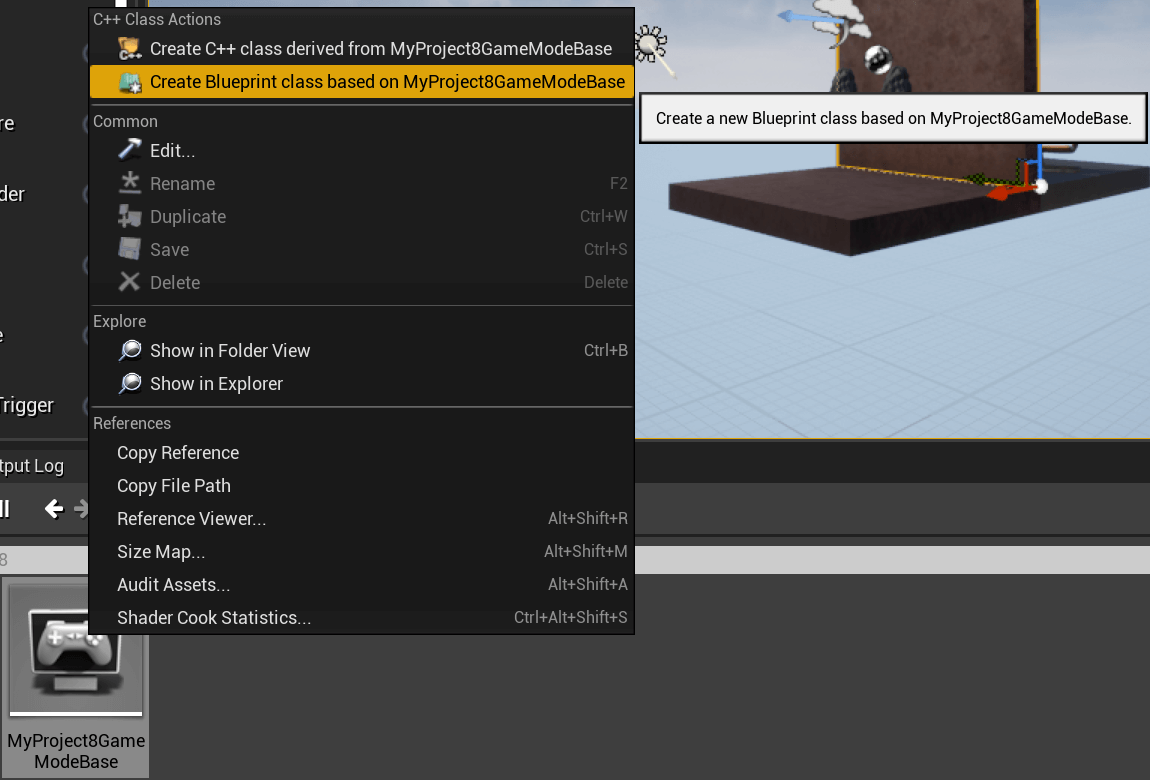
对于 C++ Classes 下的 GameModeBase,创建游戏模式蓝图 Create Blueprint class based on ...

png

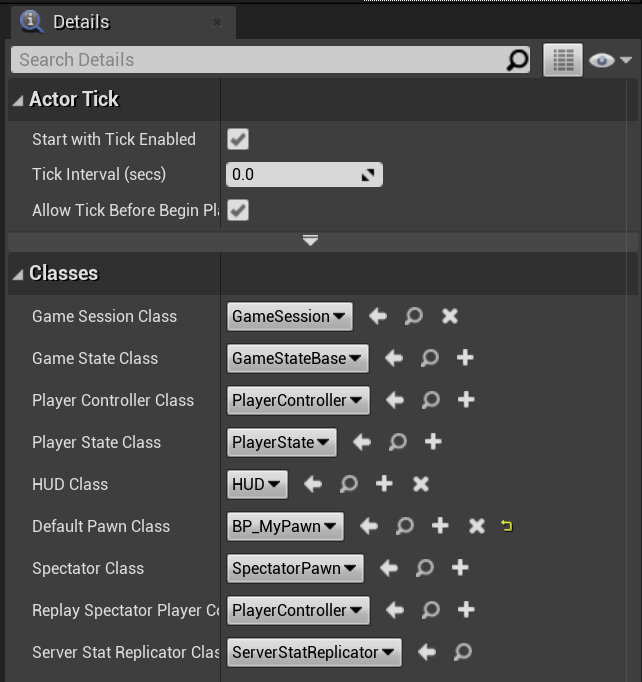
在创建的蓝图中的 Class Defaults,将 Default Pawn Class 设置为 BP_MyPawn

png

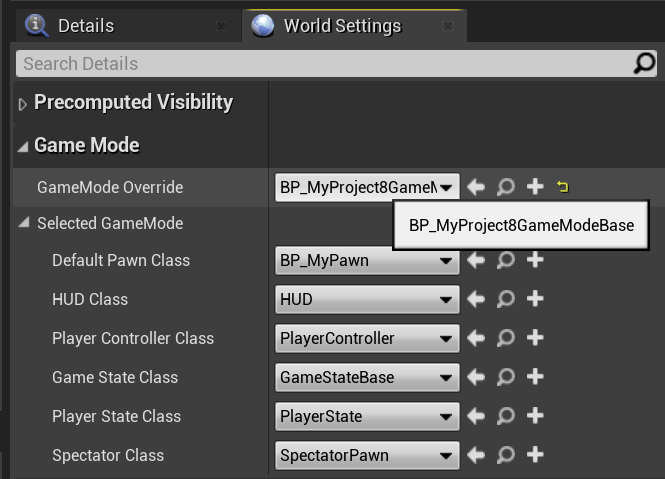
关卡中的 World Settings,设置好 GameMode Override

png

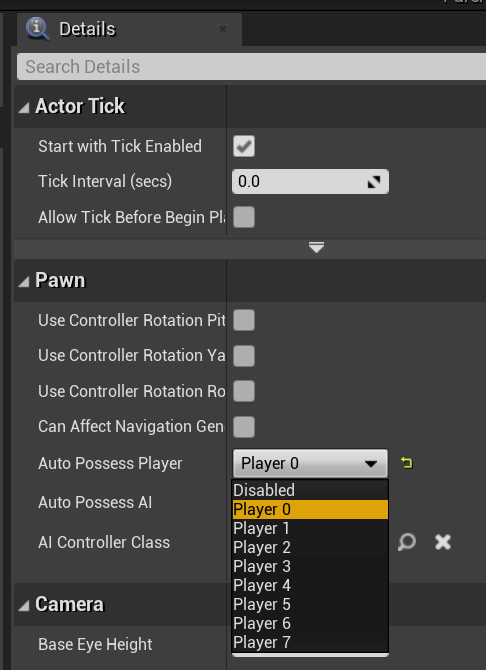
BP_MyPawn 中设置好 Auto Possess PlayerPlayer 0,或者直接修改 MyPawn.cpp,添加语句 AutoPossessPlayer = EAutoReceiveInput::Player0;

C++
#include "MyPawn.h"
#include "Components/StaticMeshComponent.h"
#include "Camera/CameraComponent.h"
 
// Sets default values
AMyPawn::AMyPawn()
{
 	// Set this pawn to call Tick() every frame.  You can turn this off to improve performance if you don't need it.
	PrimaryActorTick.bCanEverTick = true;
 
	RootComponent = CreateDefaultSubobject<USceneComponent>(TEXT("RootComponent"));
	MyStaticMesh = CreateDefaultSubobject<UStaticMeshComponent>(TEXT("MyStaticMesh"));
	MyStaticMesh->SetupAttachment(GetRootComponent());
 
	MyCamera = CreateDefaultSubobject<UCameraComponent>(TEXT("MyCamera"));
	MyCamera->SetupAttachment(GetRootComponent());
 
	MyCamera->SetRelativeLocation(FVector(-300.0f, 0.0f, 300.0f));
	MyCamera->SetRelativeRotation(FRotator(-45.0f, 0.0f, 0.0f));
 
	AutoPossessPlayer = EAutoReceiveInput::Player0;
}
 
// Called when the game starts or when spawned
void AMyPawn::BeginPlay()
{
	Super::BeginPlay();
	
}
 
// Called every frame
void AMyPawn::Tick(float DeltaTime)
{
	Super::Tick(DeltaTime);
 
}
 
// Called to bind functionality to input
void AMyPawn::SetupPlayerInputComponent(UInputComponent* PlayerInputComponent)
{
	Super::SetupPlayerInputComponent(PlayerInputComponent);
 
}

504-按键映射与轴事件绑定

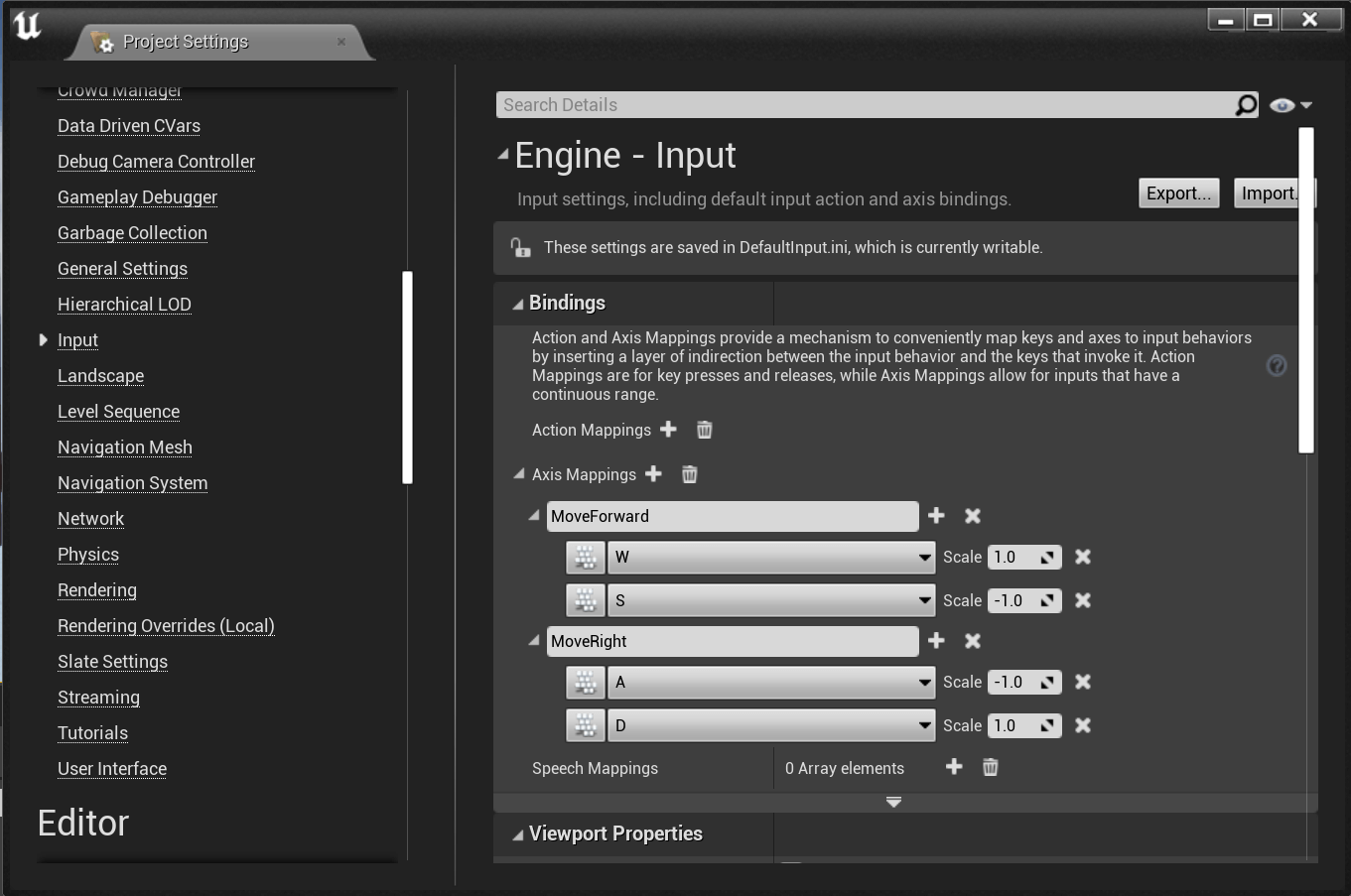
png

Project Settings 力设置按键映射。

MyPawn.h 里定义私有的移动函数:

C++
#pragma once
 
#include "CoreMinimal.h"
#include "GameFramework/Pawn.h"
#include "MyPawn.generated.h"
 
UCLASS()
class MYPROJECT8_API AMyPawn : public APawn
{
	GENERATED_BODY()
 
public:
	// Sets default values for this pawn's properties
	AMyPawn();
 
	UPROPERTY(VisibleAnywhere, Category = "My Pawn Components")
	class UStaticMeshComponent* MyStaticMesh;
 
	UPROPERTY(VisibleAnywhere, Category = "My Pawn Components")
	class UCameraComponent* MyCamera;
 
protected:
	// Called when the game starts or when spawned
	virtual void BeginPlay() override;
 
public:	
	// Called every frame
	virtual void Tick(float DeltaTime) override;
 
	// Called to bind functionality to input
	virtual void SetupPlayerInputComponent(class UInputComponent* PlayerInputComponent) override;
 
private:
	void MoveForward(float Value);
	void MoveRight(float Value);
};

MyPawn.cpp 里将按键映射与轴事件绑定:

C++
#include "MyPawn.h"
#include "Components/StaticMeshComponent.h"
#include "Camera/CameraComponent.h"
#include "Components/InputComponent.h"
 
// Sets default values
AMyPawn::AMyPawn()
{
 	// Set this pawn to call Tick() every frame.  You can turn this off to improve performance if you don't need it.
	PrimaryActorTick.bCanEverTick = true;
 
	RootComponent = CreateDefaultSubobject<USceneComponent>(TEXT("RootComponent"));
	MyStaticMesh = CreateDefaultSubobject<UStaticMeshComponent>(TEXT("MyStaticMesh"));
	MyStaticMesh->SetupAttachment(GetRootComponent());
 
	MyCamera = CreateDefaultSubobject<UCameraComponent>(TEXT("MyCamera"));
	MyCamera->SetupAttachment(GetRootComponent());
 
	MyCamera->SetRelativeLocation(FVector(-300.0f, 0.0f, 300.0f));
	MyCamera->SetRelativeRotation(FRotator(-45.0f, 0.0f, 0.0f));
 
	AutoPossessPlayer = EAutoReceiveInput::Player0;
}
 
// Called when the game starts or when spawned
void AMyPawn::BeginPlay()
{
	Super::BeginPlay();
	
}
 
// Called every frame
void AMyPawn::Tick(float DeltaTime)
{
	Super::Tick(DeltaTime);
 
}
 
// Called to bind functionality to input
void AMyPawn::SetupPlayerInputComponent(UInputComponent* PlayerInputComponent)
{
	Super::SetupPlayerInputComponent(PlayerInputComponent);
 
	PlayerInputComponent->BindAxis(TEXT("MoveForward"), this, &AMyPawn::MoveForward);
	PlayerInputComponent->BindAxis(TEXT("MoveRight"), this, &AMyPawn::MoveRight);
}
 
void AMyPawn::MoveForward(float Value)
{
}
 
void AMyPawn::MoveRight(float Value)
{
}

505-使用 Tick 的移动

修改 MyActor.h 里的内容,定义变量 MaxSpeedVelocity

C++
#pragma once
 
#include "CoreMinimal.h"
#include "GameFramework/Pawn.h"
#include "MyPawn.generated.h"
 
UCLASS()
class MYPROJECT8_API AMyPawn : public APawn
{
	GENERATED_BODY()
 
public:
	// Sets default values for this pawn's properties
	AMyPawn();
 
	UPROPERTY(VisibleAnywhere, Category = "My Pawn Components")
	class UStaticMeshComponent* MyStaticMesh;
 
	UPROPERTY(VisibleAnywhere, Category = "My Pawn Components")
	class UCameraComponent* MyCamera;
 
	UPROPERTY(EditAnywhere, Category = "My Pawn Movement")
	float MaxSpeed;
 
protected:
	// Called when the game starts or when spawned
	virtual void BeginPlay() override;
 
public:	
	// Called every frame
	virtual void Tick(float DeltaTime) override;
 
	// Called to bind functionality to input
	virtual void SetupPlayerInputComponent(class UInputComponent* PlayerInputComponent) override;
 
private:
	void MoveForward(float Value);
	void MoveRight(float Value);
	FVector Velocity;
};

修改 MyPawn.cpp 里的内容,使得物体能够随着输入而移动:

C++
#include "MyPawn.h"
#include "Components/StaticMeshComponent.h"
#include "Camera/CameraComponent.h"
#include "Components/InputComponent.h"
 
// Sets default values
AMyPawn::AMyPawn()
{
 	// Set this pawn to call Tick() every frame.  You can turn this off to improve performance if you don't need it.
	PrimaryActorTick.bCanEverTick = true;
 
	RootComponent = CreateDefaultSubobject<USceneComponent>(TEXT("RootComponent"));
	MyStaticMesh = CreateDefaultSubobject<UStaticMeshComponent>(TEXT("MyStaticMesh"));
	MyStaticMesh->SetupAttachment(GetRootComponent());
 
	MyCamera = CreateDefaultSubobject<UCameraComponent>(TEXT("MyCamera"));
	MyCamera->SetupAttachment(GetRootComponent());
 
	MyCamera->SetRelativeLocation(FVector(-300.0f, 0.0f, 300.0f));
	MyCamera->SetRelativeRotation(FRotator(-45.0f, 0.0f, 0.0f));
 
	AutoPossessPlayer = EAutoReceiveInput::Player0;
 
	MaxSpeed = 300.0f;
	Velocity = FVector::ZeroVector;
}
 
// Called when the game starts or when spawned
void AMyPawn::BeginPlay()
{
	Super::BeginPlay();
	
}
 
// Called every frame
void AMyPawn::Tick(float DeltaTime)
{
	Super::Tick(DeltaTime);
	AddActorLocalOffset(Velocity * DeltaTime, true);
}
 
// Called to bind functionality to input
void AMyPawn::SetupPlayerInputComponent(UInputComponent* PlayerInputComponent)
{
	Super::SetupPlayerInputComponent(PlayerInputComponent);
 
	PlayerInputComponent->BindAxis(TEXT("MoveForward"), this, &AMyPawn::MoveForward);
	PlayerInputComponent->BindAxis(TEXT("MoveRight"), this, &AMyPawn::MoveRight);
}
 
void AMyPawn::MoveForward(float Value)
{
	Velocity.X = FMath::Clamp(Value, -1.0f, 1.0f) * MaxSpeed;
}
 
void AMyPawn::MoveRight(float Value)
{
	Velocity.Y = FMath::Clamp(Value, -1.0f, 1.0f) * MaxSpeed;
}

506-为何要使用 DeltaTime 进行移动

使用 DeltaTime 进行移动可以使得不同帧率下的场景移动速度相等。

  • 设有两玩家,Tick 中增量 11 单位 P1 1010 FPS,deltatime=1/10=0.1sdeltatime=1/10=0.1s P2 55 FPS,deltatime=1/5=0.2sdeltatime=1/ 5=0.2s

  • 不使用 deltatimedeltatime 时 P1: 10×110\times111 秒内移动了 1010 单位 P2: 5×15\times111 秒内移动了 55 单位

  • 使用 deltatimedeltatime 时 P1: 10×1×0.1=110\times1\times0.1=111 秒内移动了 11 单位 P2: 5×1×0.2=15\times1\times0.2=111 秒内移动了 11 单位

  • FPS: Frames Per Second 6060 FPS 即 1160603030 FPS 即 113030

  • Tick 每帧调用 deltaTimedeltaTime 为两帧之间的间隔

png

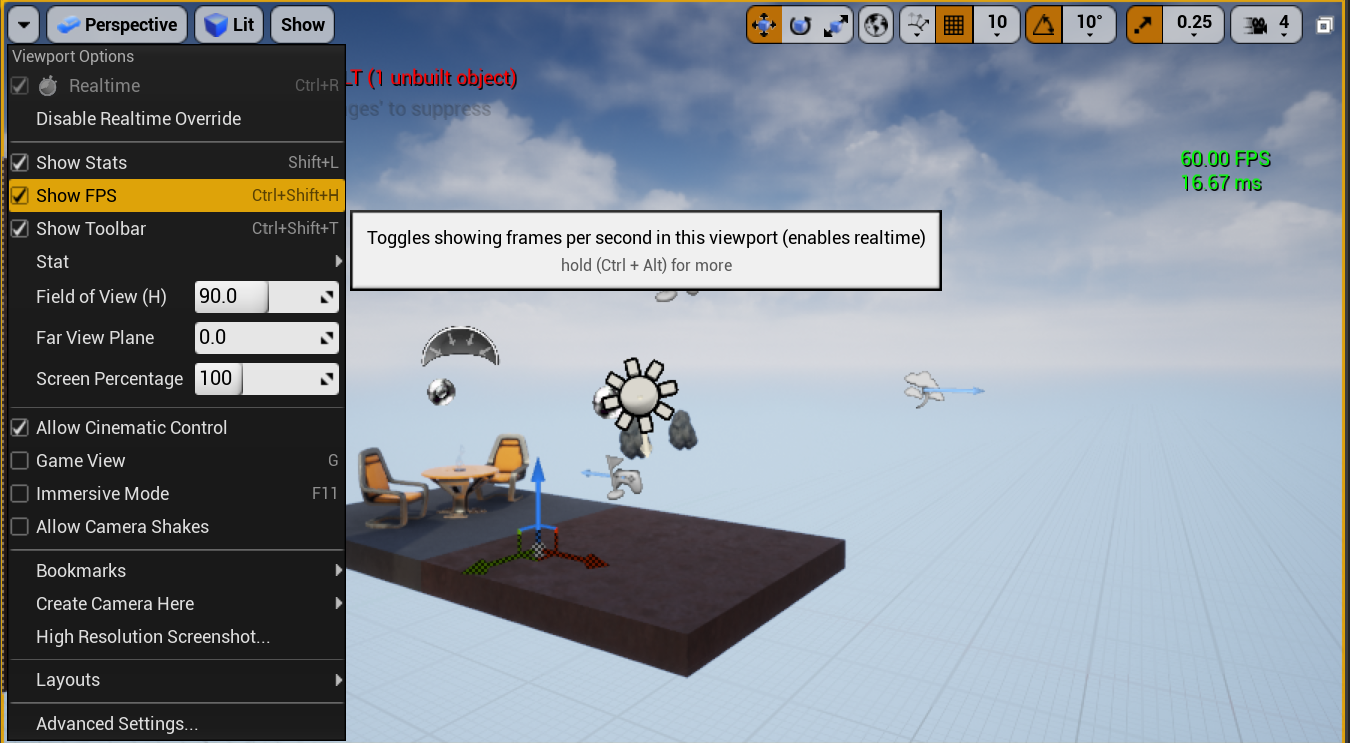
视图中这里可以显示 FPS。

png

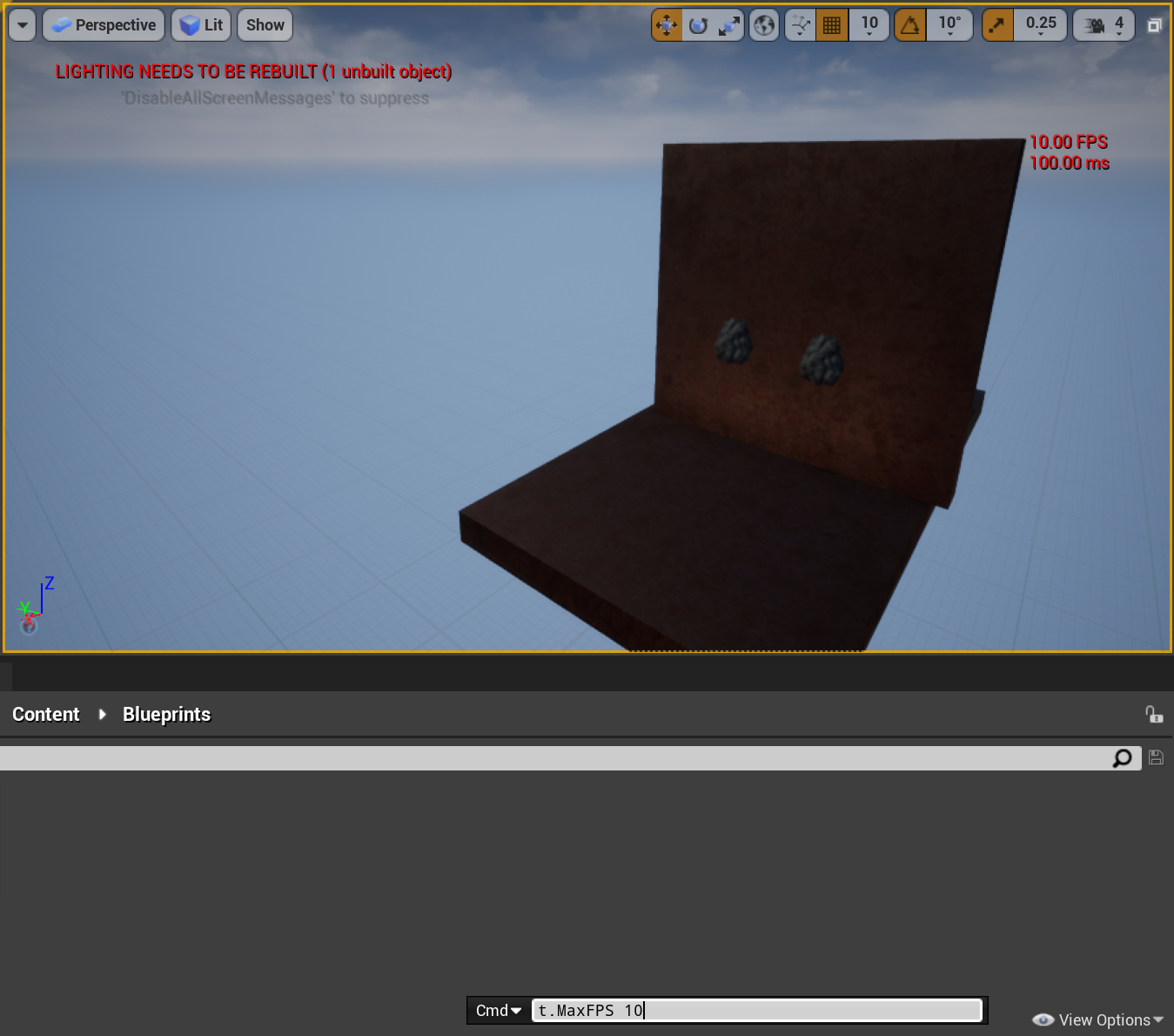
Content Browser 中按 `` 输入命令t.MaxFPS 10可以将最大帧率设为10`。

507-添加 SpringArm 组件

修改 MyPawn.h 里的内容,定义变量 class USpringArmComponent* MySpringArm;

C++
#pragma once
 
#include "CoreMinimal.h"
#include "GameFramework/Pawn.h"
#include "MyPawn.generated.h"
 
UCLASS()
class MYPROJECT8_API AMyPawn : public APawn
{
	GENERATED_BODY()
 
public:
	// Sets default values for this pawn's properties
	AMyPawn();
 
	UPROPERTY(VisibleAnywhere, Category = "My Pawn Components")
	class UStaticMeshComponent* MyStaticMesh;
 
	UPROPERTY(VisibleAnywhere, Category = "My Pawn Components")
	class UCameraComponent* MyCamera;
 
	UPROPERTY(VisibleAnywhere, Category = "My Pawn Components")
	class USpringArmComponent* MySpringArm;
 
	UPROPERTY(EditAnywhere, Category = "My Pawn Movement")
	float MaxSpeed;
 
protected:
	// Called when the game starts or when spawned
	virtual void BeginPlay() override;
 
public:	
	// Called every frame
	virtual void Tick(float DeltaTime) override;
 
	// Called to bind functionality to input
	virtual void SetupPlayerInputComponent(class UInputComponent* PlayerInputComponent) override;
 
private:
	void MoveForward(float Value);
	void MoveRight(float Value);
	FVector Velocity;
};

修改 MyPawn.cpp 里的内容:

原课程使用了:

C++
MySpringArm->RelativeRotation = FRotator(-45.0f, 0.0f, 0.0f);

但在我这个版本中这个变量变成了私有,应该为:

C++
MySpringArm->SetRelativeRotation(FRotator(-45.0f, 0.0f, 0.0f));
C++
#include "MyPawn.h"
#include "Components/StaticMeshComponent.h"
#include "Camera/CameraComponent.h"
#include "Components/InputComponent.h"
#include "GameFramework/SpringArmComponent.h"
 
// Sets default values
AMyPawn::AMyPawn()
{
 	// Set this pawn to call Tick() every frame.  You can turn this off to improve performance if you don't need it.
	PrimaryActorTick.bCanEverTick = true;
 
	RootComponent = CreateDefaultSubobject<USceneComponent>(TEXT("RootComponent"));
	MyStaticMesh = CreateDefaultSubobject<UStaticMeshComponent>(TEXT("MyStaticMesh"));
	MyStaticMesh->SetupAttachment(GetRootComponent());
 
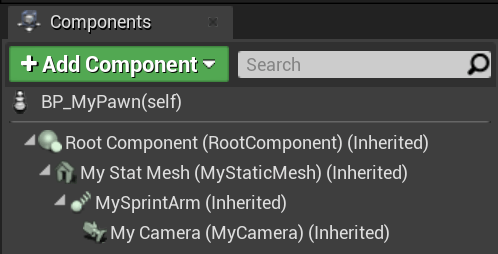
	MySpringArm = CreateDefaultSubobject<USpringArmComponent>(TEXT("MySprintArm"));
	MySpringArm->SetupAttachment(MyStaticMesh);
	MySpringArm->SetRelativeRotation(FRotator(-45.0f, 0.0f, 0.0f));
	MySpringArm->TargetArmLength = 400.0f;
	MySpringArm->bEnableCameraLag = true;
	MySpringArm->CameraLagSpeed = 3.0f;
 
	MyCamera = CreateDefaultSubobject<UCameraComponent>(TEXT("MyCamera"));
	MyCamera->SetupAttachment(GetRootComponent());
 
	MyCamera->SetRelativeLocation(FVector(-300.0f, 0.0f, 300.0f));
	MyCamera->SetRelativeRotation(FRotator(-45.0f, 0.0f, 0.0f));
	MyCamera->SetupAttachment(MySpringArm);
 
	AutoPossessPlayer = EAutoReceiveInput::Player0;
 
	MaxSpeed = 300.0f;
	Velocity = FVector::ZeroVector;
}
 
// Called when the game starts or when spawned
void AMyPawn::BeginPlay()
{
	Super::BeginPlay();
	
}
 
// Called every frame
void AMyPawn::Tick(float DeltaTime)
{
	Super::Tick(DeltaTime);
	AddActorLocalOffset(Velocity * DeltaTime, true);
}
 
// Called to bind functionality to input
void AMyPawn::SetupPlayerInputComponent(UInputComponent* PlayerInputComponent)
{
	Super::SetupPlayerInputComponent(PlayerInputComponent);
 
	PlayerInputComponent->BindAxis(TEXT("MoveForward"), this, &AMyPawn::MoveForward);
	PlayerInputComponent->BindAxis(TEXT("MoveRight"), this, &AMyPawn::MoveRight);
}
 
void AMyPawn::MoveForward(float Value)
{
	Velocity.X = FMath::Clamp(Value, -1.0f, 1.0f) * MaxSpeed;
}
 
void AMyPawn::MoveRight(float Value)
{
	Velocity.Y = FMath::Clamp(Value, -1.0f, 1.0f) * MaxSpeed;
}

删除原有的 BP_MyPawn,重新创建一个。然后开跑!

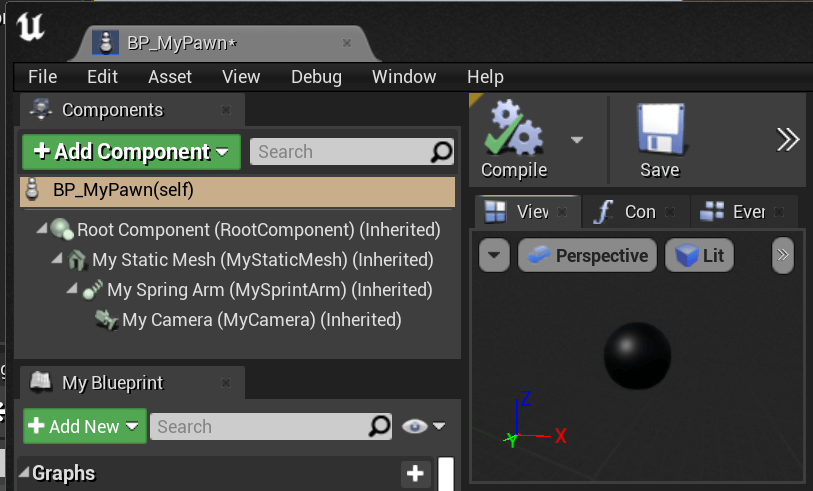
png

508-使用 C++ 代码设置模型与材质的默认值

修改 MyPawn.h 里的内容,给 UStaticMeshComponentUSpringArmComponent 添加 Get 函数。

C++
#pragma once
 
#include "CoreMinimal.h"
#include "GameFramework/Pawn.h"
#include "MyPawn.generated.h"
 
UCLASS()
class MYPROJECT8_API AMyPawn : public APawn
{
	GENERATED_BODY()
 
public:
	// Sets default values for this pawn's properties
	AMyPawn();
 
	UPROPERTY(VisibleAnywhere, Category = "My Pawn Components")
	class UStaticMeshComponent* MyStaticMesh;
 
	UPROPERTY(VisibleAnywhere, Category = "My Pawn Components")
	class UCameraComponent* MyCamera;
 
	UPROPERTY(VisibleAnywhere, Category = "My Pawn Components")
	class USpringArmComponent* MySpringArm;
 
	UPROPERTY(EditAnywhere, Category = "My Pawn Movement")
	float MaxSpeed;
 
	FORCEINLINE UStaticMeshComponent* GetStaticMeshComponent() { return MyStaticMesh; }
	FORCEINLINE USpringArmComponent* GetSpringArmComponent() { return MySpringArm; }
 
protected:
	// Called when the game starts or when spawned
	virtual void BeginPlay() override;
 
public:	
	// Called every frame
	virtual void Tick(float DeltaTime) override;
 
	// Called to bind functionality to input
	virtual void SetupPlayerInputComponent(class UInputComponent* PlayerInputComponent) override;
 
private:
	void MoveForward(float Value);
	void MoveRight(float Value);
	FVector Velocity;
};

修改 MyPawn.cpp 里的内容:

C++
#include "MyPawn.h"
#include "Components/StaticMeshComponent.h"
#include "Camera/CameraComponent.h"
#include "Components/InputComponent.h"
#include "GameFramework/SpringArmComponent.h"
#include "UObject/ConstructorHelpers.h"
 
// Sets default values
AMyPawn::AMyPawn()
{
 	// Set this pawn to call Tick() every frame.  You can turn this off to improve performance if you don't need it.
	PrimaryActorTick.bCanEverTick = true;
 
	RootComponent = CreateDefaultSubobject<USceneComponent>(TEXT("RootComponent"));
	MyStaticMesh = CreateDefaultSubobject<UStaticMeshComponent>(TEXT("MyStaticMesh"));
	MyStaticMesh->SetupAttachment(GetRootComponent());
 
	static ConstructorHelpers::FObjectFinder<UStaticMesh> StaticMeshAsset(TEXT("StaticMesh'/Engine/EngineMeshes/Sphere.Sphere'"));
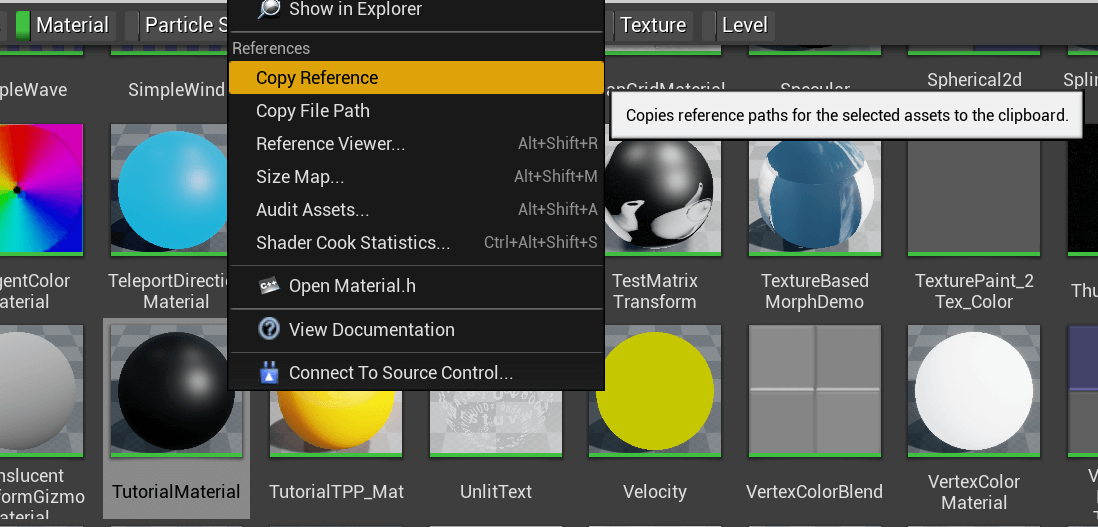
	static ConstructorHelpers::FObjectFinder<UMaterialInterface> MaterialAsset(TEXT("Material'/Engine/Tutorial/SubEditors/TutorialAssets/TutorialMaterial.TutorialMaterial'"));
	if (StaticMeshAsset.Succeeded() && MaterialAsset.Succeeded())
	{
		MyStaticMesh->SetStaticMesh(StaticMeshAsset.Object);
		MyStaticMesh->SetMaterial(0, MaterialAsset.Object);
		MyStaticMesh->SetWorldScale3D(FVector(0.5f));
	}
 
	MySpringArm = CreateDefaultSubobject<USpringArmComponent>(TEXT("MySprintArm"));
	MySpringArm->SetupAttachment(GetStaticMeshComponent());
	MySpringArm->SetRelativeRotation(FRotator(-45.0f, 0.0f, 0.0f));
	MySpringArm->TargetArmLength = 400.0f;
	MySpringArm->bEnableCameraLag = true;
	MySpringArm->CameraLagSpeed = 3.0f;
 
	MyCamera = CreateDefaultSubobject<UCameraComponent>(TEXT("MyCamera"));
	MyCamera->SetupAttachment(GetRootComponent());
 
	MyCamera->SetRelativeLocation(FVector(-300.0f, 0.0f, 300.0f));
	MyCamera->SetRelativeRotation(FRotator(-45.0f, 0.0f, 0.0f));
	MyCamera->SetupAttachment(GetSpringArmComponent());
 
	AutoPossessPlayer = EAutoReceiveInput::Player0;
 
	MaxSpeed = 300.0f;
	Velocity = FVector::ZeroVector;
}
 
// Called when the game starts or when spawned
void AMyPawn::BeginPlay()
{
	Super::BeginPlay();
	
}
 
// Called every frame
void AMyPawn::Tick(float DeltaTime)
{
	Super::Tick(DeltaTime);
	AddActorLocalOffset(Velocity * DeltaTime, true);
}
 
// Called to bind functionality to input
void AMyPawn::SetupPlayerInputComponent(UInputComponent* PlayerInputComponent)
{
	Super::SetupPlayerInputComponent(PlayerInputComponent);
 
	PlayerInputComponent->BindAxis(TEXT("MoveForward"), this, &AMyPawn::MoveForward);
	PlayerInputComponent->BindAxis(TEXT("MoveRight"), this, &AMyPawn::MoveRight);
}
 
void AMyPawn::MoveForward(float Value)
{
	Velocity.X = FMath::Clamp(Value, -1.0f, 1.0f) * MaxSpeed;
}
 
void AMyPawn::MoveRight(float Value)
{
	Velocity.Y = FMath::Clamp(Value, -1.0f, 1.0f) * MaxSpeed;
}
png

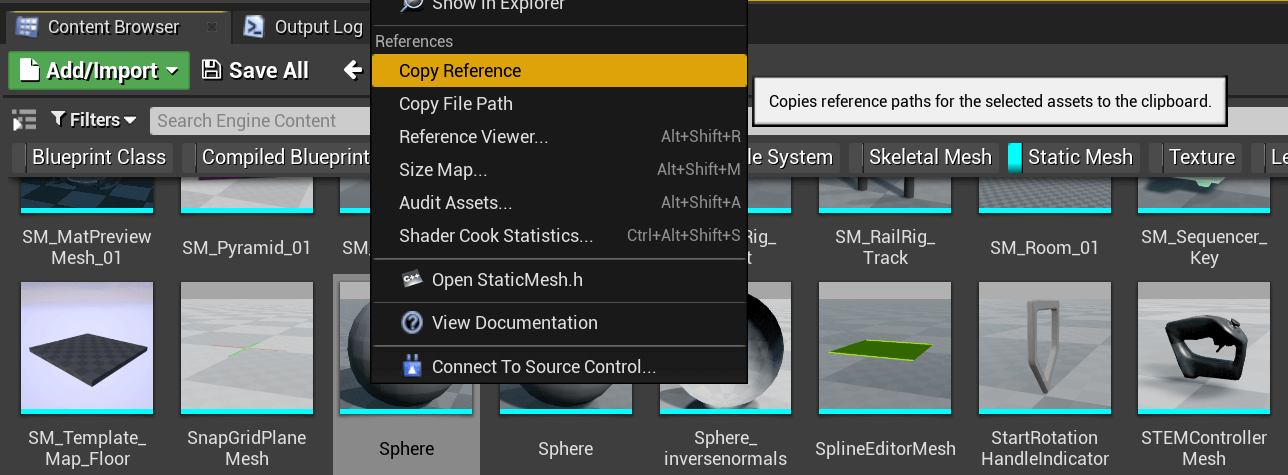
StaticMeshAsset(TEXT()) 的里的值可以以此法获得。

png

MaterialAsset(TEXT()) 的里的值可以以此法获得。

png

编译后删除蓝图,重新构建 BP_MyPawn

509-Sweep 仅对根组件生效

之前的代码中:

C++
AddActorLocalOffset(Velocity * DeltaTime, true);

开启了 Sweep 却不能使得碰撞生效,这是因为 Sweep 只能对跟组件生效,因此要修改 MyPawn.cpp,将 MyStaticMesh 设为根组件:

C++
#include "MyPawn.h"
#include "Components/StaticMeshComponent.h"
#include "Camera/CameraComponent.h"
#include "Components/InputComponent.h"
#include "GameFramework/SpringArmComponent.h"
#include "UObject/ConstructorHelpers.h"
 
// Sets default values
AMyPawn::AMyPawn()
{
 	// Set this pawn to call Tick() every frame.  You can turn this off to improve performance if you don't need it.
	PrimaryActorTick.bCanEverTick = true;
 
	// RootComponent = CreateDefaultSubobject<USceneComponent>(TEXT("RootComponent"));
	MyStaticMesh = CreateDefaultSubobject<UStaticMeshComponent>(TEXT("MyStaticMesh"));
	RootComponent = MyStaticMesh;
	MyStaticMesh->SetCollisionProfileName(TEXT("Pawn"));
 
	static ConstructorHelpers::FObjectFinder<UStaticMesh> StaticMeshAsset(TEXT("StaticMesh'/Engine/EngineMeshes/Sphere.Sphere'"));
	static ConstructorHelpers::FObjectFinder<UMaterialInterface> MaterialAsset(TEXT("Material'/Engine/Tutorial/SubEditors/TutorialAssets/TutorialMaterial.TutorialMaterial'"));
	if (StaticMeshAsset.Succeeded() && MaterialAsset.Succeeded())
	{
		MyStaticMesh->SetStaticMesh(StaticMeshAsset.Object);
		MyStaticMesh->SetMaterial(0, MaterialAsset.Object);
		MyStaticMesh->SetWorldScale3D(FVector(0.5f));
	}
 
	MySpringArm = CreateDefaultSubobject<USpringArmComponent>(TEXT("MySprintArm"));
	MySpringArm->SetupAttachment(GetStaticMeshComponent());
	MySpringArm->SetRelativeRotation(FRotator(-45.0f, 0.0f, 0.0f));
	MySpringArm->TargetArmLength = 400.0f;
	MySpringArm->bEnableCameraLag = true;
	MySpringArm->CameraLagSpeed = 3.0f;
 
	MyCamera = CreateDefaultSubobject<UCameraComponent>(TEXT("MyCamera"));
	MyCamera->SetupAttachment(GetRootComponent());
 
	MyCamera->SetRelativeLocation(FVector(-300.0f, 0.0f, 300.0f));
	MyCamera->SetRelativeRotation(FRotator(-45.0f, 0.0f, 0.0f));
	MyCamera->SetupAttachment(GetSpringArmComponent());
 
	AutoPossessPlayer = EAutoReceiveInput::Player0;
 
	MaxSpeed = 300.0f;
	Velocity = FVector::ZeroVector;
}
 
// Called when the game starts or when spawned
void AMyPawn::BeginPlay()
{
	Super::BeginPlay();
	
}
 
// Called every frame
void AMyPawn::Tick(float DeltaTime)
{
	Super::Tick(DeltaTime);
	AddActorLocalOffset(Velocity * DeltaTime, true);
}
 
// Called to bind functionality to input
void AMyPawn::SetupPlayerInputComponent(UInputComponent* PlayerInputComponent)
{
	Super::SetupPlayerInputComponent(PlayerInputComponent);
 
	PlayerInputComponent->BindAxis(TEXT("MoveForward"), this, &AMyPawn::MoveForward);
	PlayerInputComponent->BindAxis(TEXT("MoveRight"), this, &AMyPawn::MoveRight);
}
 
void AMyPawn::MoveForward(float Value)
{
	Velocity.X = FMath::Clamp(Value, -1.0f, 1.0f) * MaxSpeed;
}
 
void AMyPawn::MoveRight(float Value)
{
	Velocity.Y = FMath::Clamp(Value, -1.0f, 1.0f) * MaxSpeed;
}

510-控制视野上下查看

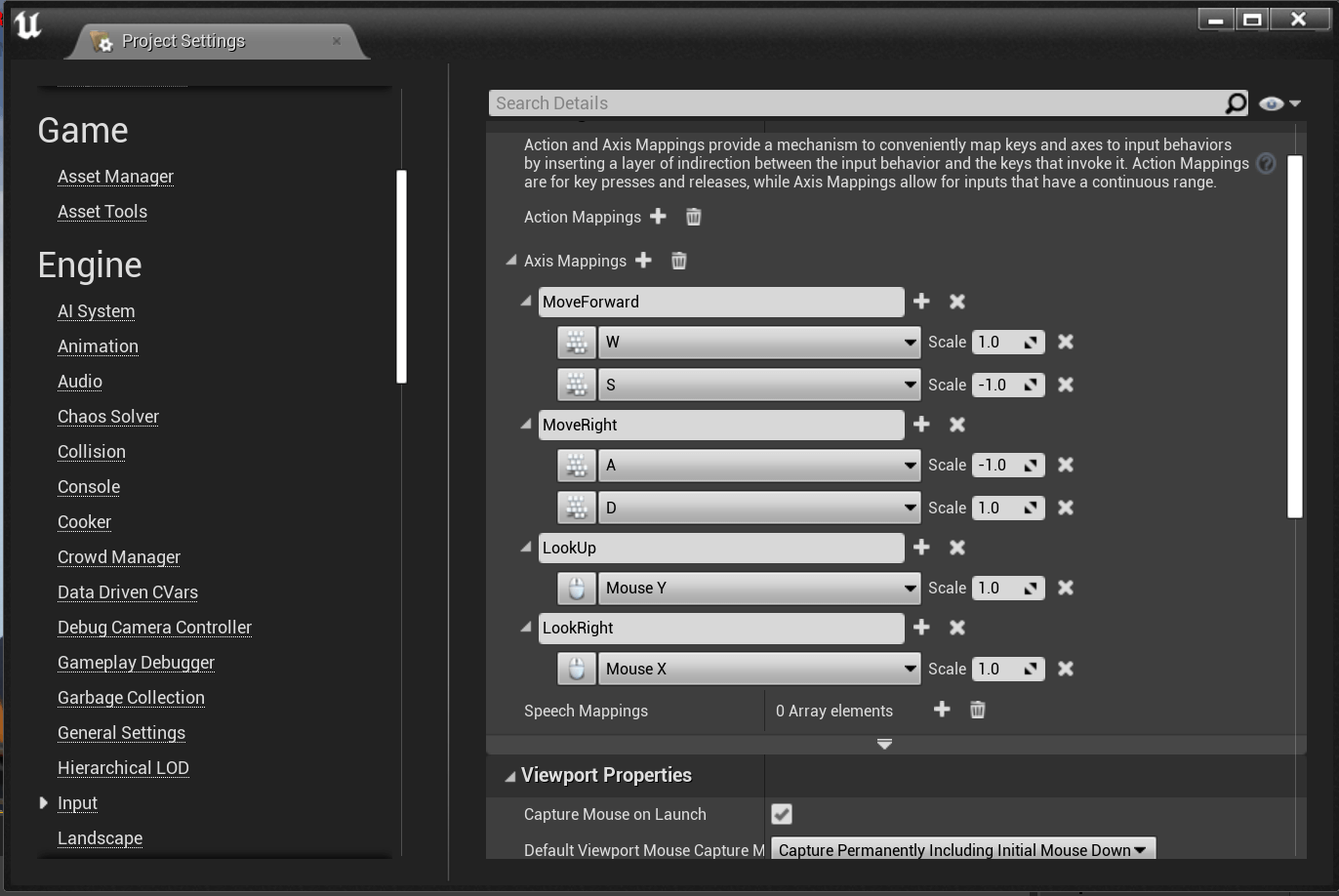
png

Project Settings 里添加两个轴 LookUpLookRight

修改 MyPawn.h 里的内容,定义函数 LookUp()LookRight(),鼠标的输入 MouseInput

C++
#pragma once
 
#include "CoreMinimal.h"
#include "GameFramework/Pawn.h"
#include "MyPawn.generated.h"
 
UCLASS()
class MYPROJECT8_API AMyPawn : public APawn
{
	GENERATED_BODY()
 
public:
	// Sets default values for this pawn's properties
	AMyPawn();
 
	UPROPERTY(VisibleAnywhere, Category = "My Pawn Components")
	class UStaticMeshComponent* MyStaticMesh;
 
	UPROPERTY(VisibleAnywhere, Category = "My Pawn Components")
	class UCameraComponent* MyCamera;
 
	UPROPERTY(VisibleAnywhere, Category = "My Pawn Components")
	class USpringArmComponent* MySpringArm;
 
	UPROPERTY(EditAnywhere, Category = "My Pawn Movement")
	float MaxSpeed;
 
	FORCEINLINE UStaticMeshComponent* GetStaticMeshComponent() { return MyStaticMesh; }
	FORCEINLINE USpringArmComponent* GetSpringArmComponent() { return MySpringArm; }
 
protected:
	// Called when the game starts or when spawned
	virtual void BeginPlay() override;
 
public:	
	// Called every frame
	virtual void Tick(float DeltaTime) override;
 
	// Called to bind functionality to input
	virtual void SetupPlayerInputComponent(class UInputComponent* PlayerInputComponent) override;
 
private:
	void MoveForward(float Value);
	void MoveRight(float Value);
	FVector Velocity;
 
	void LookUp(float Value);
	void LookRight(float Value);
	FVector2D MouseInput;
};

修改 MyPawn.cpp 里的内容,完成视野随鼠标向上下查看的功能:

C++
#include "MyPawn.h"
#include "Components/StaticMeshComponent.h"
#include "Camera/CameraComponent.h"
#include "Components/InputComponent.h"
#include "GameFramework/SpringArmComponent.h"
#include "UObject/ConstructorHelpers.h"
 
// Sets default values
AMyPawn::AMyPawn()
{
 	// Set this pawn to call Tick() every frame.  You can turn this off to improve performance if you don't need it.
	PrimaryActorTick.bCanEverTick = true;
 
	// RootComponent = CreateDefaultSubobject<USceneComponent>(TEXT("RootComponent"));
	MyStaticMesh = CreateDefaultSubobject<UStaticMeshComponent>(TEXT("MyStaticMesh"));
	RootComponent = MyStaticMesh;
	MyStaticMesh->SetCollisionProfileName(TEXT("Pawn"));
 
	static ConstructorHelpers::FObjectFinder<UStaticMesh> StaticMeshAsset(TEXT("StaticMesh'/Engine/EngineMeshes/Sphere.Sphere'"));
	static ConstructorHelpers::FObjectFinder<UMaterialInterface> MaterialAsset(TEXT("Material'/Engine/Tutorial/SubEditors/TutorialAssets/TutorialMaterial.TutorialMaterial'"));
	if (StaticMeshAsset.Succeeded() && MaterialAsset.Succeeded())
	{
		MyStaticMesh->SetStaticMesh(StaticMeshAsset.Object);
		MyStaticMesh->SetMaterial(0, MaterialAsset.Object);
		MyStaticMesh->SetWorldScale3D(FVector(0.5f));
	}
 
	MySpringArm = CreateDefaultSubobject<USpringArmComponent>(TEXT("MySprintArm"));
	MySpringArm->SetupAttachment(GetStaticMeshComponent());
	MySpringArm->SetRelativeRotation(FRotator(-45.0f, 0.0f, 0.0f));
	MySpringArm->TargetArmLength = 400.0f;
	MySpringArm->bEnableCameraLag = true;
	MySpringArm->CameraLagSpeed = 3.0f;
 
	MyCamera = CreateDefaultSubobject<UCameraComponent>(TEXT("MyCamera"));
	MyCamera->SetupAttachment(GetRootComponent());
 
	MyCamera->SetRelativeLocation(FVector(-300.0f, 0.0f, 300.0f));
	MyCamera->SetRelativeRotation(FRotator(-45.0f, 0.0f, 0.0f));
	MyCamera->SetupAttachment(GetSpringArmComponent());
 
	AutoPossessPlayer = EAutoReceiveInput::Player0;
 
	MaxSpeed = 300.0f;
	Velocity = FVector::ZeroVector;
}
 
// Called when the game starts or when spawned
void AMyPawn::BeginPlay()
{
	Super::BeginPlay();
	
}
 
// Called every frame
void AMyPawn::Tick(float DeltaTime)
{
	Super::Tick(DeltaTime);
	AddActorLocalOffset(Velocity * DeltaTime, true);
 
	// X, Y, Z 在虚幻的旋转轴对应 Roll, Pitch, Yaw
	FRotator NewSpringArmRotation = MySpringArm->GetComponentRotation();
	NewSpringArmRotation.Pitch = FMath::Clamp(NewSpringArmRotation.Pitch += MouseInput.Y, -80.0f, 0.0f);
	MySpringArm->SetWorldRotation(NewSpringArmRotation);
}
 
// Called to bind functionality to input
void AMyPawn::SetupPlayerInputComponent(UInputComponent* PlayerInputComponent)
{
	Super::SetupPlayerInputComponent(PlayerInputComponent);
 
	PlayerInputComponent->BindAxis(TEXT("MoveForward"), this, &AMyPawn::MoveForward);
	PlayerInputComponent->BindAxis(TEXT("MoveRight"), this, &AMyPawn::MoveRight);
	PlayerInputComponent->BindAxis(TEXT("LookUp"), this, &AMyPawn::LookUp);
	PlayerInputComponent->BindAxis(TEXT("LookRight"), this, &AMyPawn::LookRight);
}
 
void AMyPawn::MoveForward(float Value)
{
	Velocity.X = FMath::Clamp(Value, -1.0f, 1.0f) * MaxSpeed;
}
 
void AMyPawn::MoveRight(float Value)
{
	Velocity.Y = FMath::Clamp(Value, -1.0f, 1.0f) * MaxSpeed;
}
 
void AMyPawn::LookUp(float Value)
{
	MouseInput.Y = FMath::Clamp(Value, -1.0f, 1.0f);
}
 
void AMyPawn::LookRight(float Value)
{
	MouseInput.X = FMath::Clamp(Value, -1.0f, 1.0f);
}

511-使用 Controller 控制视野左右旋转

修改 MyPawn.cpp 里的内容,完成视野随鼠标向左右查看的功能(AddControllerYawInput(MouseInput.X);):

C++
#include "MyPawn.h"
#include "Components/StaticMeshComponent.h"
#include "Camera/CameraComponent.h"
#include "Components/InputComponent.h"
#include "GameFramework/SpringArmComponent.h"
#include "UObject/ConstructorHelpers.h"
 
// Sets default values
AMyPawn::AMyPawn()
{
 	// Set this pawn to call Tick() every frame.  You can turn this off to improve performance if you don't need it.
	PrimaryActorTick.bCanEverTick = true;
 
	// RootComponent = CreateDefaultSubobject<USceneComponent>(TEXT("RootComponent"));
	MyStaticMesh = CreateDefaultSubobject<UStaticMeshComponent>(TEXT("MyStaticMesh"));
	RootComponent = MyStaticMesh;
	MyStaticMesh->SetCollisionProfileName(TEXT("Pawn"));
 
	static ConstructorHelpers::FObjectFinder<UStaticMesh> StaticMeshAsset(TEXT("StaticMesh'/Engine/EngineMeshes/Sphere.Sphere'"));
	static ConstructorHelpers::FObjectFinder<UMaterialInterface> MaterialAsset(TEXT("Material'/Engine/Tutorial/SubEditors/TutorialAssets/TutorialMaterial.TutorialMaterial'"));
	if (StaticMeshAsset.Succeeded() && MaterialAsset.Succeeded())
	{
		MyStaticMesh->SetStaticMesh(StaticMeshAsset.Object);
		MyStaticMesh->SetMaterial(0, MaterialAsset.Object);
		MyStaticMesh->SetWorldScale3D(FVector(0.5f));
	}
 
	MySpringArm = CreateDefaultSubobject<USpringArmComponent>(TEXT("MySprintArm"));
	MySpringArm->SetupAttachment(GetStaticMeshComponent());
	MySpringArm->SetRelativeRotation(FRotator(-45.0f, 0.0f, 0.0f));
	MySpringArm->TargetArmLength = 400.0f;
	MySpringArm->bEnableCameraLag = true;
	MySpringArm->CameraLagSpeed = 3.0f;
 
	MyCamera = CreateDefaultSubobject<UCameraComponent>(TEXT("MyCamera"));
	MyCamera->SetupAttachment(GetRootComponent());
 
	MyCamera->SetRelativeLocation(FVector(-300.0f, 0.0f, 300.0f));
	MyCamera->SetRelativeRotation(FRotator(-45.0f, 0.0f, 0.0f));
	MyCamera->SetupAttachment(GetSpringArmComponent());
 
	AutoPossessPlayer = EAutoReceiveInput::Player0;
	bUseControllerRotationRoll = true;
	bUseControllerRotationPitch = true;
	bUseControllerRotationYaw = true;
 
	MaxSpeed = 300.0f;
	Velocity = FVector::ZeroVector;
}
 
// Called when the game starts or when spawned
void AMyPawn::BeginPlay()
{
	Super::BeginPlay();
	
}
 
// Called every frame
void AMyPawn::Tick(float DeltaTime)
{
	Super::Tick(DeltaTime);
	AddActorLocalOffset(Velocity * DeltaTime, true);
 
	// X, Y, Z 在虚幻的旋转轴对应 Roll, Pitch, Yaw
	AddControllerYawInput(MouseInput.X);
 
	FRotator NewSpringArmRotation = MySpringArm->GetComponentRotation();
	NewSpringArmRotation.Pitch = FMath::Clamp(NewSpringArmRotation.Pitch += MouseInput.Y, -80.0f, 0.0f);
	MySpringArm->SetWorldRotation(NewSpringArmRotation);
}
 
// Called to bind functionality to input
void AMyPawn::SetupPlayerInputComponent(UInputComponent* PlayerInputComponent)
{
	Super::SetupPlayerInputComponent(PlayerInputComponent);
 
	PlayerInputComponent->BindAxis(TEXT("MoveForward"), this, &AMyPawn::MoveForward);
	PlayerInputComponent->BindAxis(TEXT("MoveRight"), this, &AMyPawn::MoveRight);
	PlayerInputComponent->BindAxis(TEXT("LookUp"), this, &AMyPawn::LookUp);
	PlayerInputComponent->BindAxis(TEXT("LookRight"), this, &AMyPawn::LookRight);
}
 
void AMyPawn::MoveForward(float Value)
{
	Velocity.X = FMath::Clamp(Value, -1.0f, 1.0f) * MaxSpeed;
}
 
void AMyPawn::MoveRight(float Value)
{
	Velocity.Y = FMath::Clamp(Value, -1.0f, 1.0f) * MaxSpeed;
}
 
void AMyPawn::LookUp(float Value)
{
	MouseInput.Y = FMath::Clamp(Value, -1.0f, 1.0f);
}
 
void AMyPawn::LookRight(float Value)
{
	MouseInput.X = FMath::Clamp(Value, -1.0f, 1.0f);
}
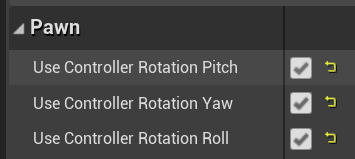
png

这些属性是用于控制 Pawn 的旋转是否受控制器的旋转影响。具体说明如下:

  • bUseControllerRotationRoll:设置为 true 时,表示 Pawn 的 Roll 旋转将受控制器的 Roll 旋转影响。
  • bUseControllerRotationPitch:设置为 true 时,表示 Pawn 的 Pitch 旋转将受控制器的 Pitch 旋转影响。
  • bUseControllerRotationYaw:设置为 true 时,表示 Pawn 的 Yaw 旋转将受控制器的 Yaw 旋转影响。

当这些属性被设置为 true 时,Pawn 的旋转将由控制器来决定,而不是由组件自身的旋转规则决定。这在某些情况下非常有用,例如第一人称或第三人称视角的角色控制,其中玩家可以通过控制器来旋转角色的方向。